
|
Most people buy a pain relief cream and never look past the front of the package. But the real story is on the back, in the Drug Facts panel and the ingredient list. If you want to know what you are actually rubbing into your skin, learning to read that label matters more than any word on the front like “natural” or “clean.” |
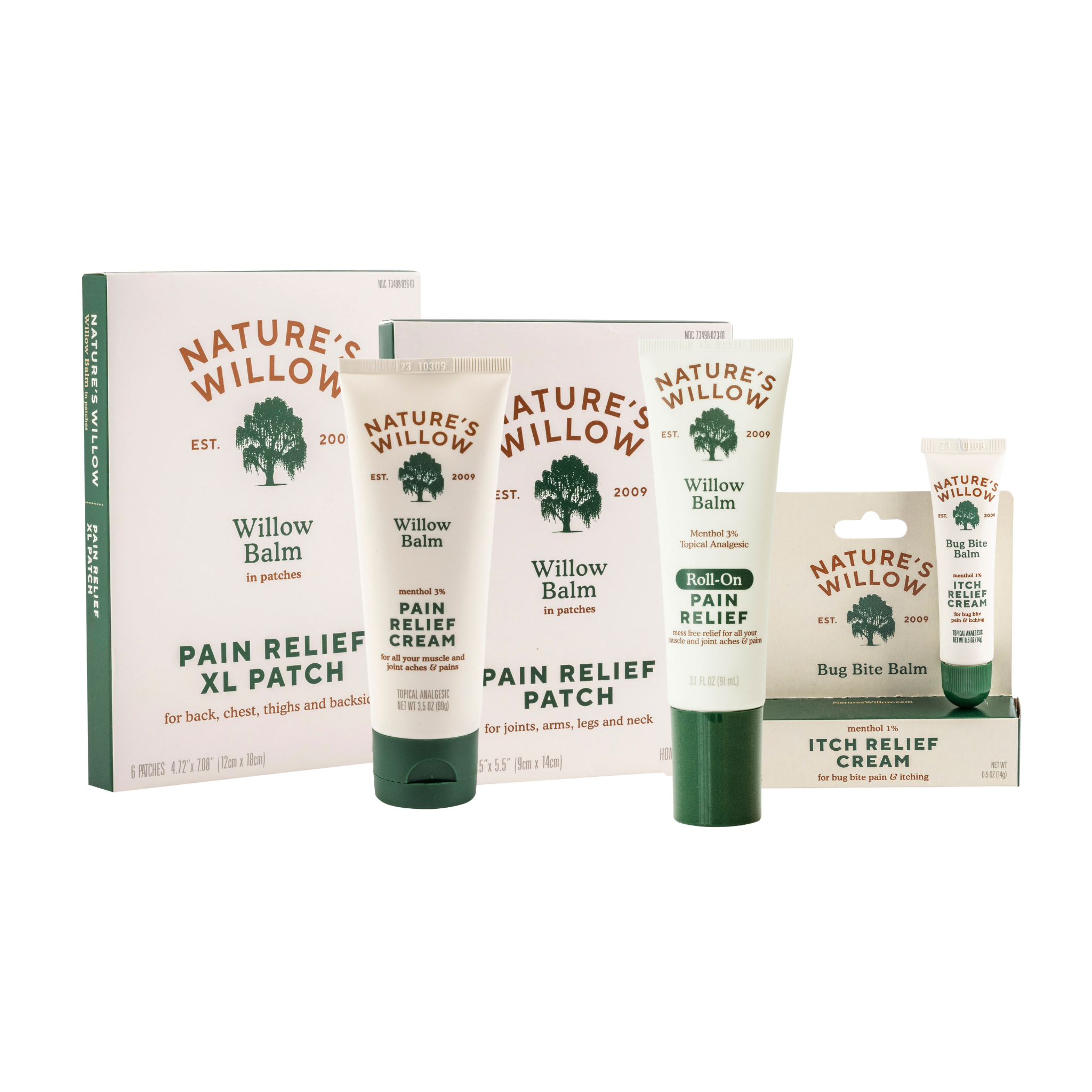
This guide breaks down what to look for in a pain cream, its ingredients, what active and inactive ingredients actually mean, and how Nature’s Willow Natural Pain Relief Cream is formulated using menthol, white willow bark, camphor, and a blend of botanical oils.
How To Read OTC Topical Pain Relief Ingredient Labels
Every OTC topical pain cream sold in the US carries a standardized Drug Facts label, regulated by the FDA. It is broken into a few consistent sections:
- Active ingredient and its concentration
- Purpose of that ingredient
- Uses, meaning what the product is intended to treat
- Warnings, including who should avoid the product and when to stop use
- Directions, how much to apply, and how often
- Inactive ingredients, listed separately underneath
|
Tip: The Label in 30 Seconds Start with the active ingredient and its concentration. Check the purpose and uses. Read directions and warnings. Then scan inactive ingredients for anything you personally want to avoid. |
Understanding Active vs. Inactive Ingredients in Natural Pain Relief Creams
This is the part most shoppers get wrong.
An active ingredient is the substance officially responsible for the product's intended drug effect. It is the ingredient that the FDA requires to be listed with a specific concentration and purpose.
Inactive ingredients make up the rest of the formula. They are not there to treat pain directly, but they are not filler either. They control texture, absorption, preservation, and how the product feels on skin.
|
Category |
Nature's Willow Pain Relief Cream |
|
Active ingredient |
Menthol 3% |
|
Inactive ingredients |
White willow bark extract, camphor, botanical oils, emollients, emulsifiers, preservatives, and water |
Inactive does not mean unnecessary. It means the ingredient is not the one carrying the FDA-recognized drug claim.
Key Nature's Willow Topical Pain Relief Ingredients
Menthol: The Active Topical Analgesic
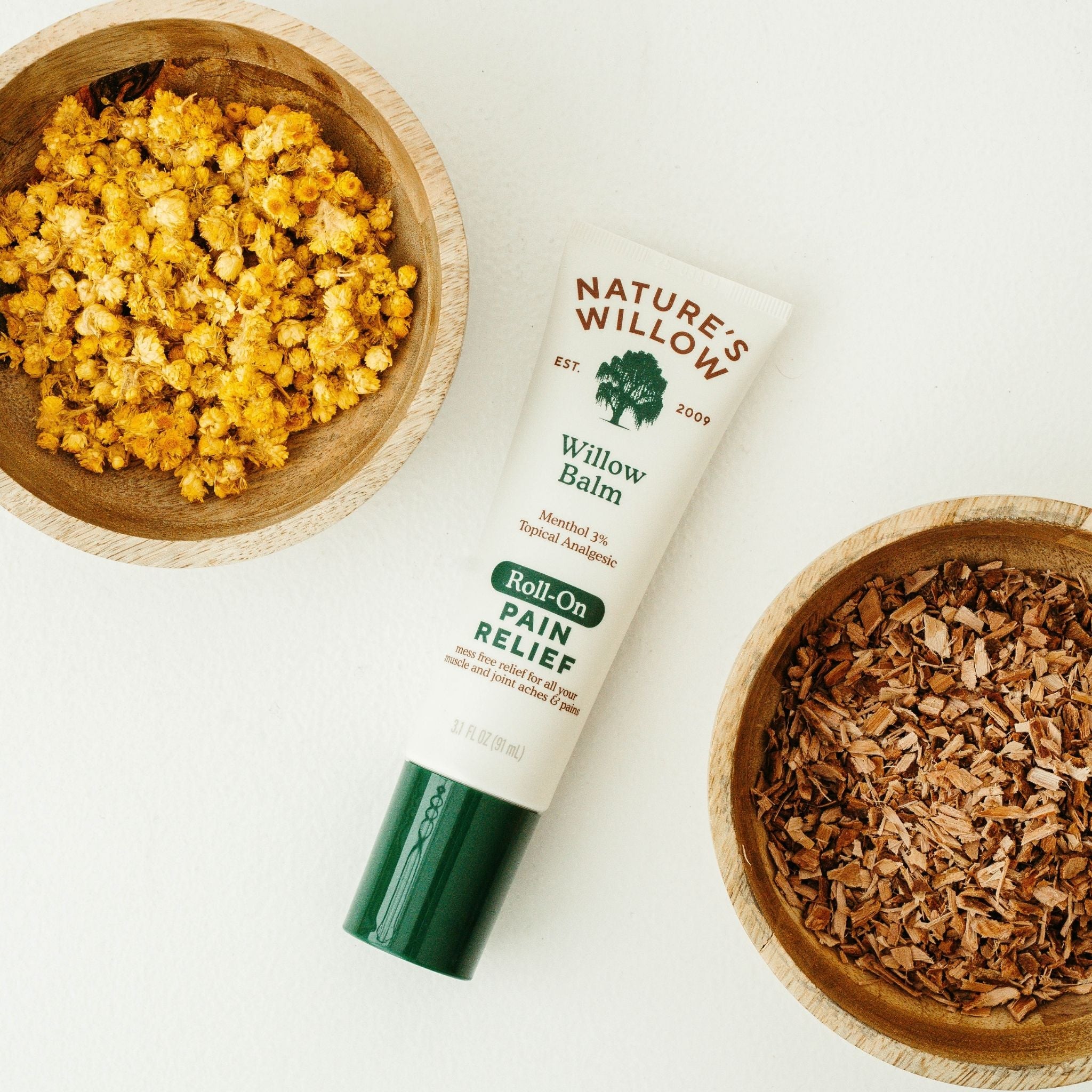
Menthol is the ingredient doing the recognized work here. Nature’s Willow uses it at 3%, which produces the cooling sensation associated with temporary relief of minor muscle and joint aches. As with any topical analgesic, it should be applied only as directed on the label and not layered with heating pads or occlusive bandages.
For stiff, aching joints, topical products are just one of several non-drug approaches people may consider. Explore our guide to natural arthritis pain relief for practical ways to support comfort and everyday movement.
White Willow Bark Extract
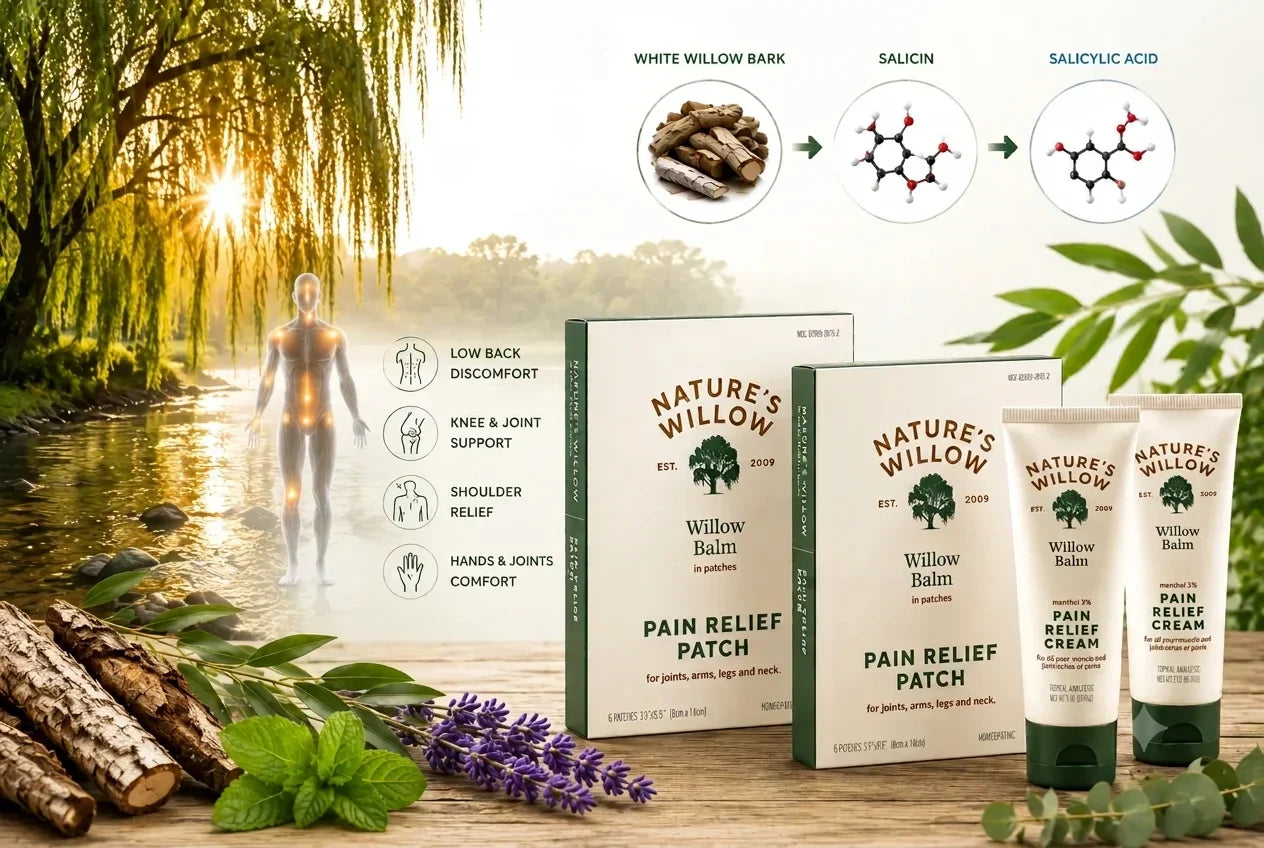
White willow bark comes from Salix alba, a tree whose bark has a long history in traditional pain-relief preparations, largely due to naturally occurring compounds like salicin. NCCIH’s overview of willow bark is a useful, evidence-based reference if you want to go deeper into the research.
Worth being precise here: white willow bark is part of Nature’s Willow’s botanical blend, but it is not the listed active ingredient in the current formula. It should not be marketed or understood as a direct aspirin substitute.
Camphor
Camphor is a naturally occurring aromatic compound, not an essential oil. It shows up in the inactive ingredient list of this formula and contributes to the characteristic cooling and warming sensation people associate with pain creams. Its active or inactive classification can vary between products, so this is always worth checking on the specific label in front of you.
Essential Oils And Herbal Extracts In Topical Analgesics
These oils contribute aroma, sensory feel, and the overall botanical character of the cream. They are not independently marketed as pain-relief agents.
|
Tip for Sensitive Skin Patch test any product containing essential oils before full application. Botanicals can still irritate some people despite being plant-derived. |
What Do the Other Inactive Ingredients Do?
Most ingredient label guides either skip this section or dump twenty names on the page with no context. It also tells you what to actually look for in a natural pain relief cream. Here is what they actually do, grouped by function:
|
Ingredient Group |
Examples |
Role in the Formula |
|
Carrier and base |
Water |
Forms the base of the cream |
|
Plant-derived oils and emollients |
Almond oil, sunflower oil, jojoba seed extract |
Condition skin and improve spreadability |
|
Texture and consistency |
Cetearyl alcohol, cetyl alcohol, stearyl alcohol, stearic acid |
Create a stable, spreadable texture |
|
Emulsifiers |
Ceteareth-20, glyceryl stearate SE |
Keep oil and water components blended |
|
Humectants |
Propanediol |
Supports moisture and skin feel |
|
Formula protection |
Phenoxyethanol, sorbic acid, caprylyl glycol |
Maintain stability and limit microbial growth |
A chemical-sounding name is not automatically a red flag. These ingredients exist to make the product usable, stable, and safe to store.
Clean Skin-Safe Ingredients: Paraben-Free, Phthalate-Free & Plant-Based Claims
“Clean” is not a regulated or standardized term in skincare or OTC drug labeling. It means something different on every brand’s website. A more reliable approach is to check the full ingredient list against whatever specific ingredients you personally want to avoid, rather than relying on the word itself.
Nature’s Willow states its Pain Relief Cream is formulated without artificial fragrances, dyes, parabens, petrochemicals, and phthalates. You can verify current claims directly on the product ingredients.
No Artificial Fragrance vs Fragrance-Free Pain Relief Cream
These two phrases are used interchangeably, but they are not the same thing.
|
Term |
What It Means |
|
Fragrance-free |
Generally means nothing has been added specifically to create a scent |
|
No artificial fragrance |
Means no synthetic fragrance has been added, but the product can still carry a natural aroma from botanical ingredients |
Because this formula contains aromatic essential oils like lavender and eucalyptus, “no artificial fragrance” is the accurate description, not “fragrance-free.”
What to Look for When Choosing a Natural Pain Cream
- Identify the active ingredient and its concentration.
- Confirm the product’s intended uses match your needs.
- Read the directions and warnings before applying.
- Check inactive ingredients against any known sensitivities or allergies.
- Verify specific free-from claims instead of trusting the word “natural” alone.
If hiking, gardening, sports, or yard work leaves you sore, the right topical cream can be a useful part of your recovery routine. Read our guide to outdoor pain relief to learn how to manage common activity-related aches before they slow you down.
How to Use Topical Pain Cream Safely
- Use externally only, on intact skin.
- Avoid contact with eyes and mucous membranes.
- Do not apply to open wounds or damaged skin.
- Do not cover with a tight bandage.
- Follow the frequency stated on the product label.
- Consult a physician before use in children under 12.
- Stop use and seek medical advice if irritation develops or pain persists.
|
Warning Do not combine topical pain relief cream with heating pads, hot water bottles, or tight bandages. Heat increases the risk of burns and skin irritation. |
Explore the full Nature’s Willow Natural Pain Relief Cream, read more about how white willow bark has traditionally been used, or browse the complete pain relief.