
|
WHITE WILLOW BARK BENEFITS AT A GLANCE White willow bark comes from the Salix alba tree and contains salicin, which the body converts into salicylic acid, the same active metabolite that aspirin breaks down into. It's traditionally used for:
Studied doses run 120–240 mg of salicin per day for oral use. It's not recommended for children, pregnant or breastfeeding women, or anyone with an aspirin allergy or bleeding disorder. |
If you're reading this, there's a good chance you're in pain right now, an aching back, a stiff knee, or joints that flare with the weather. Maybe you've tried ibuprofen, and it upset your stomach, so you're searching for something more natural. You're not imagining the connection: white willow bark is the plant that gave us aspirin, used for thousands of years to dull pain and bring down fevers. But “natural” doesn't automatically mean “safe for everyone,” so this guide covers the real science, the real risks, and the real difference between swallowing it and rubbing it on.
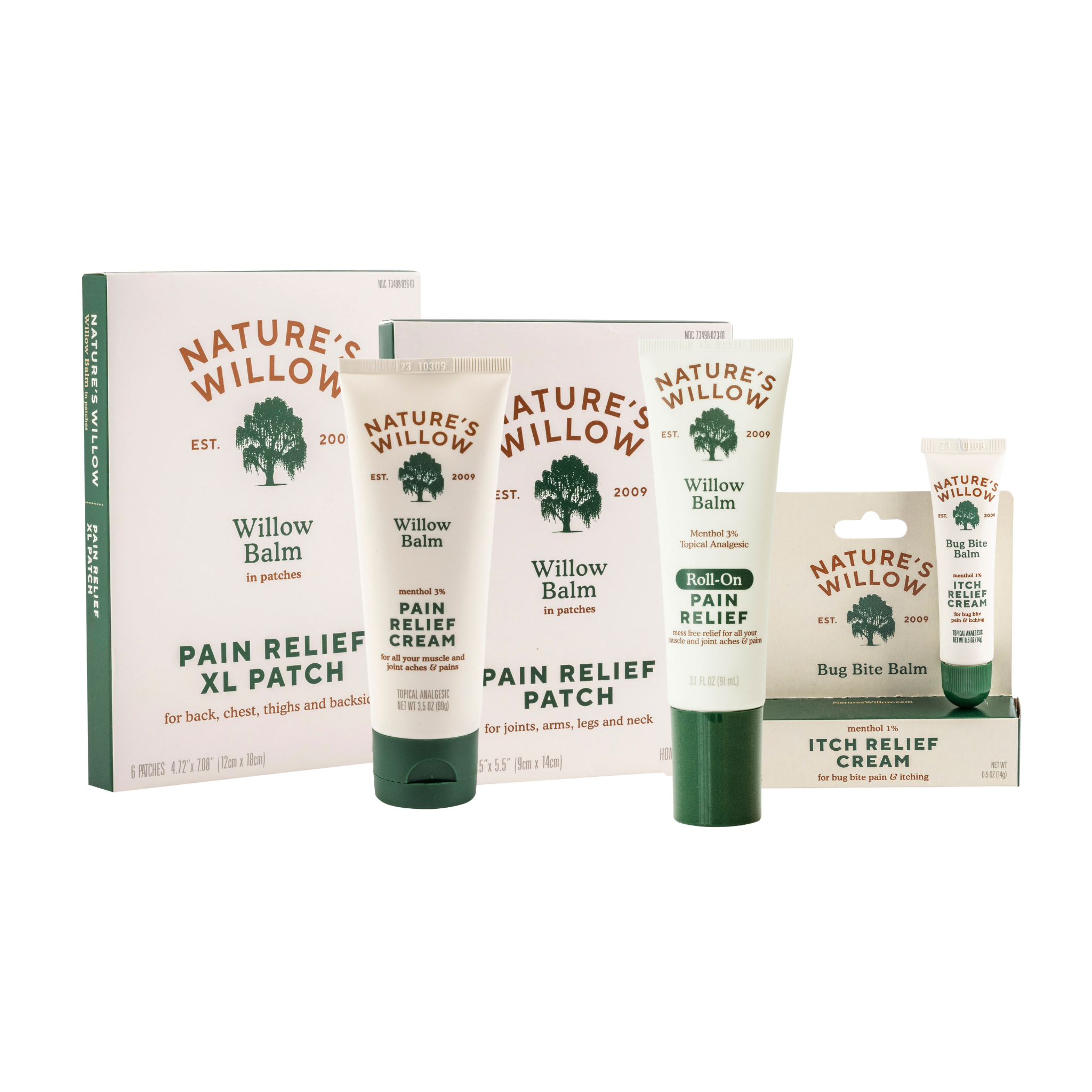
At Nature's Willow, this is the plant our whole product line is built around: topical balms, patches, and a roll-on made with white willow bark extract, free of artificial dyes and fragrance. Here's what science actually says.
What Is White Willow Bark?
White willow bark comes from a tree native to Europe, Central Asia, and North Africa. Its inner bark contains salicin, plus supporting flavonoids and polyphenols. Once swallowed, salicin converts into salicylic acid, the metabolite aspirin (acetylsalicylic acid) also breaks down into, which is why willow bark earned the nickname “nature's aspirin.” Per the NCCIH, it's been used for centuries for pain, headaches, and inflammatory conditions like bursitis and tendinitis, and its salicin content is what originally led to the development of aspirin.
A Quick History of Aspirin Willow Tree
Willow bark's use goes back millennia; ancient Egyptian and Sumerian texts describe willow leaves used for joint pain, and Hippocrates reportedly recommended it around 400 BC. In 1763, English clergyman Edward Stone treated about 50 feverish patients with powdered willow bark and reported his results to the Royal Society, one of the earliest clinical trials of a natural remedy. Chemist Joseph Buchner isolated salicin in 1828.
The final step came in 1897, when Bayer chemist Felix Hoffmann added an acetyl group to salicylic acid, creating acetylsalicylic acid, gentler on the stomach while keeping the pain relief. Bayer launched it as Aspirin in 1899 (Wikipedia). Aspirin was essentially invented to keep willow bark's benefits while engineering out its harshness, same family, different molecule.
White Willow Bark Benefits: What the Research Shows
Willow Bark For Pain
This is the top reason people search for willow bark. Clinical trials using standardized extracts of 120–240 mg salicin per day showed real, measurable relief for lower back pain and menstrual cramps, with the higher dose outperforming the lower one.
Willow Bark For Joint Pain & Arthritis
Evidence is mixed. Some placebo-controlled trials found meaningful benefit for hip/knee osteoarthritis; others from the same research group found no advantage over placebo for osteoarthritis or rheumatoid arthritis (EBSCO). It may help some people, but it isn't a guaranteed fix.
For Fever & Inflammation
Willow bark's original traditional use dates back to Stone's 18th-century experiments. Like aspirin, salicylic acid interferes with prostaglandin production, the chemical messengers behind pain, swelling, and fever.
Antioxidant Support
Flavonoids and polyphenols in the bark are believed to work alongside salicin to support its overall anti-inflammatory effect (MSKCC).
Willow Bark vs. Aspirin
|
White Willow Bark |
Aspirin |
|
|
Active compound |
Salicin (converts to salicylic acid) |
Acetylsalicylic acid |
|
Source |
Natural, tree bark |
Synthesized |
|
Onset |
Slower, must be metabolized first |
Faster, already active |
|
Standardization |
Varies by product |
Standardized per tablet |
|
GI side effects |
Generally milder, not risk-free |
Well-documented irritation/bleeding risk |
|
Best evidence for |
Chronic low back pain, dysmenorrhea |
Acute pain, fever, cardiovascular protection |
Willow bark isn't simply a weaker, safer aspirin substitute; it shares aspirin's mechanism and many of the same precautions.
Is Willow Bark Safe?
A 2019 safety review by the U.S. Pharmacopeia found no serious adverse effects in adult trials at 120–240 mg salicin/day for up to eight weeks, mostly mild GI upset and occasional allergic reactions.
|
CHECK WITH A DOCTOR FIRST IF YOU ARE…
|
Otherwise healthy adults have a reasonably good safety track record at studied doses, but talk to your doctor before starting, especially if you take other medications.
Does Willow Bark Work Topically?
Applied as a balm, cream, or patch, willow bark doesn't rely on digestion to convert salicin; the goal is localized relief right where you hurt, with less systemic exposure than swallowing a capsule. A study in the International Journal of Cosmetic Science found supportive evidence for topical salicin's role in skin comfort, building on its known anti-inflammatory action.
Topical use offers targeted relief, lower systemic exposure than oral salicylates, and fast, practical application, with no waiting for digestion.
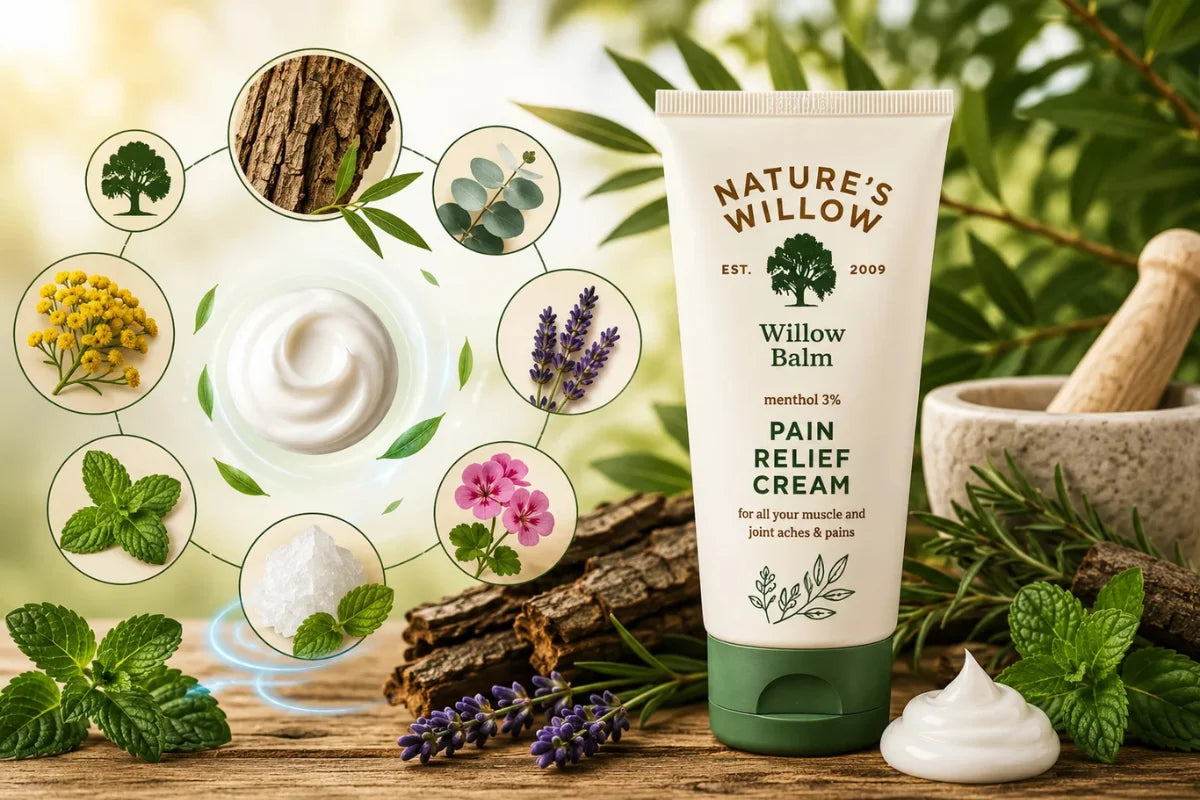
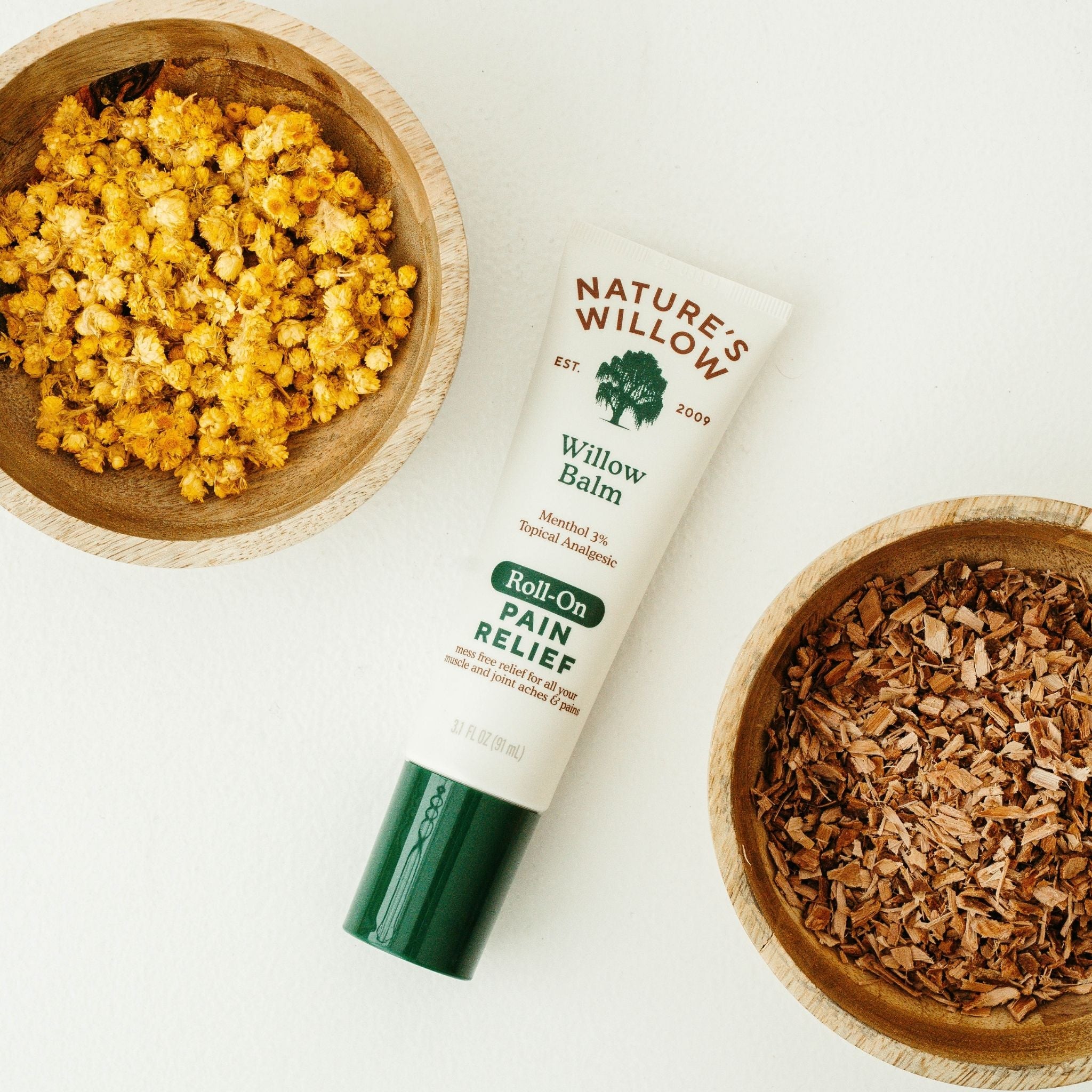
This is the gap Nature's Willow fills. Our Pain Relief Cream pairs white willow bark with menthol for fast cooling relief, plus helichrysum, camphor, and eucalyptus, finished with lavender and geranium with no artificial dyes, parabens, or synthetic fragrance. Our Pain Relieving Patches and Roll-On deliver the same willow bark base for on-the-go use.
How to Use It
- Tea or capsules: 120–240 mg salicin/day is the studied range; follow label directions and check with a doctor if you take other medications.
- Topical balm, cream, or patch: Apply to clean, intact skin over the sore area; patch-test first if you're sensitive to aspirin or salicylates.
- Tincture: A traditional format used similarly to capsules, though potency varies by brand since it isn't FDA-standardized.
The Bottom Line
White willow bark is the plant that led to aspirin, and modern research backs real (if not universal) benefit for pain, particularly chronic low back pain and menstrual cramps. It isn't risk-free for everyone, but for many healthy adults, it's a well-researched natural option, whether taken orally or applied topically right where it hurts.
|
If it's targeted relief you need, take a look at Nature's Willow's Pain Relief collection, formulated with the same bark that started it all, without artificial dyes or fragrances. |
This article is for informational purposes only and is not a substitute for professional medical advice. Talk to your doctor before starting any new supplement, especially if you are pregnant, nursing, taking medication, or have an underlying health condition.