
QUICK ANSWERMenthol relieves pain by activating TRPM8, a cold-sensing receptor in your skin's nerve endings. This triggers a cooling sensation that acts as a counterirritant; it competes with and dampens deeper pain signals before they reach the brain, while also easing localized muscle tension. Most over-the-counter products use 3–16% menthol; clinical studies show concentrations of 3–3.5% are enough to produce measurable pain relief in sore muscles and joints. The cooling effect fades in 30–70 minutes, but the pain-relieving effect can last 1–3 hours. |
You rub it on, and within seconds your skin goes cold, then warm, then somehow the ache actually feels smaller. It's a strange enough sensation that it's fair to ask: is that real pain relief, or just a menthol-scented distraction?
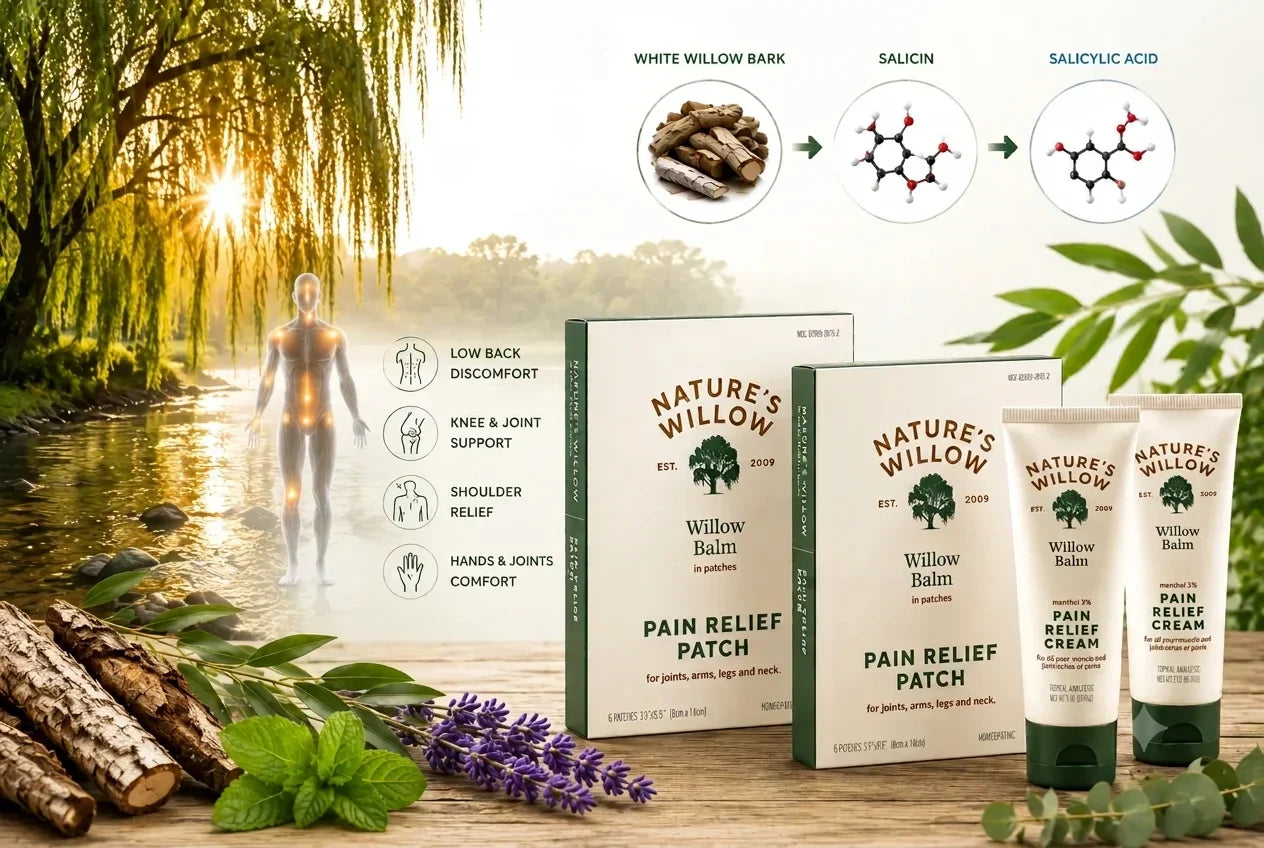
The honest answer is both, and once you understand the mechanism, you can actually use menthol products the right way instead of just rubbing on willow cream and hoping. This guide breaks down how menthol works for pain, what the research actually shows, which percentage matters, and how to get the most out of it, including where menthol fits alongside ingredients like white willow bark in our natural pain relief ointment.
What Is Menthol, Anyway?
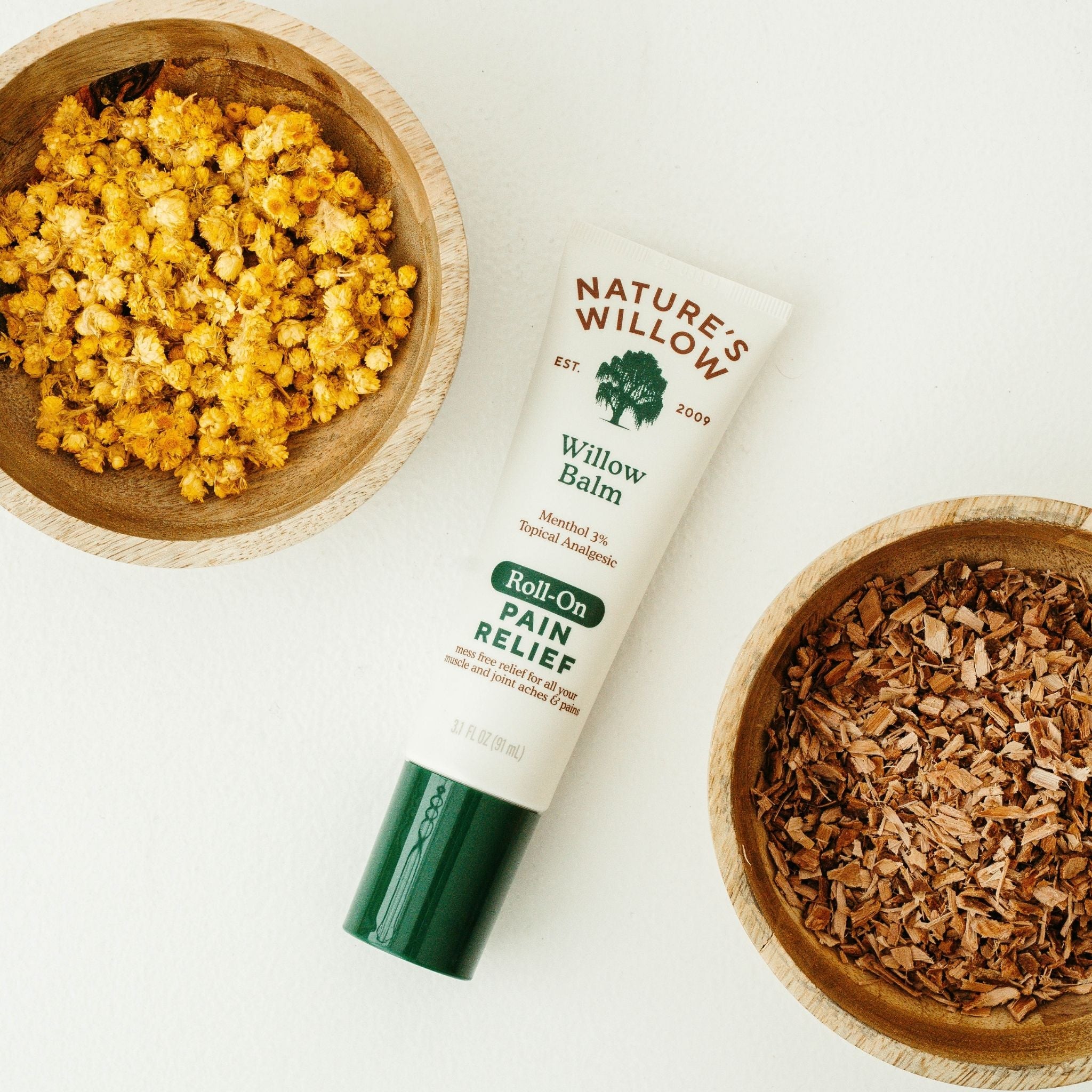
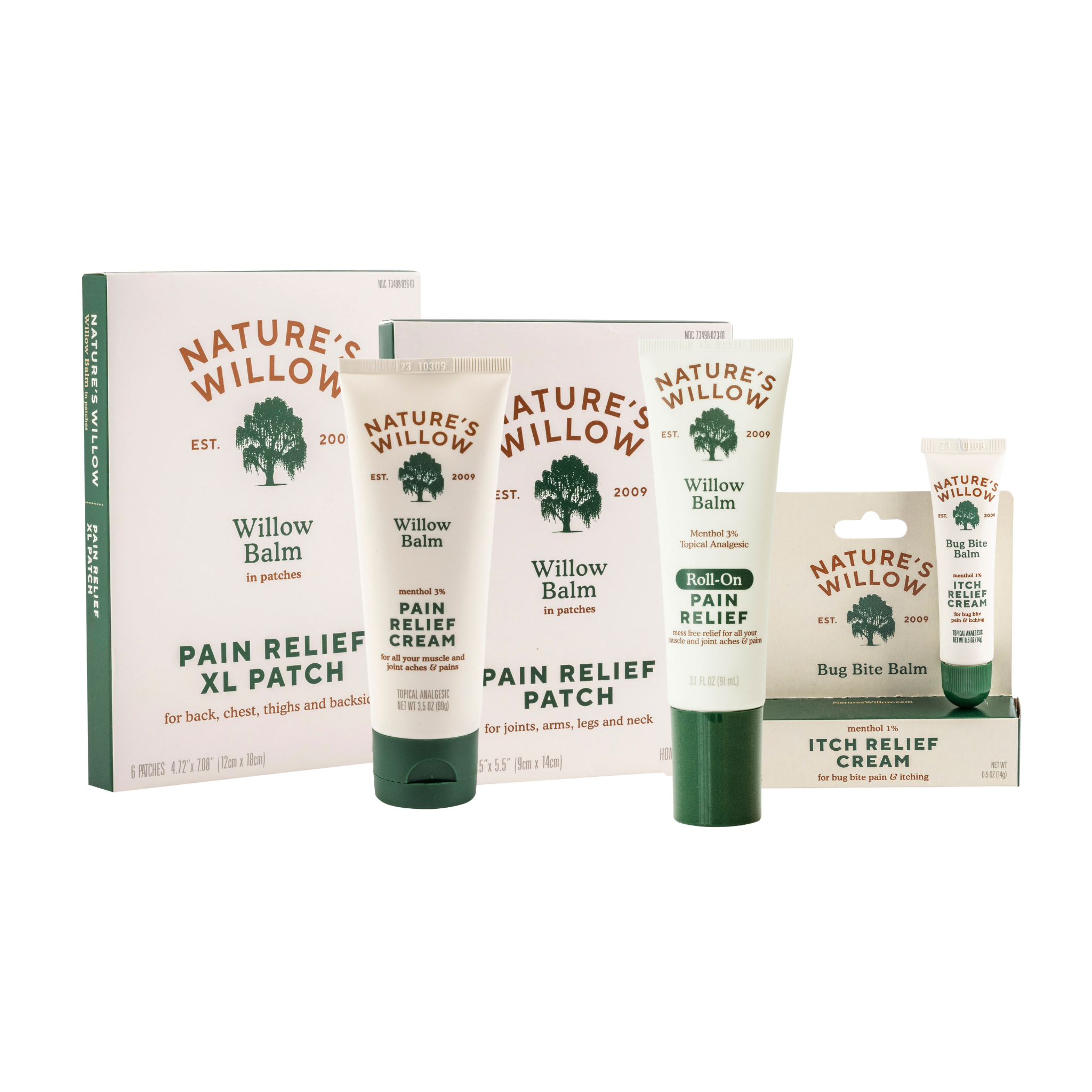
Menthol is a natural compound extracted from peppermint and other mint plants (it's also made synthetically for commercial use). It's been used for pain relief since ancient Greece. Hippocrates himself considered mint a cooling agent for aches. Today, it's one of the most common active ingredients in over-the-counter analgesic creams, gels, Regular Pain Relief Patches , and roll-ons, often alongside actives like camphor, methyl salicylate, or white willow bark.
Pharmacologically, menthol is classified as a counterirritant, a substance that creates one strong sensation on the skin (cold, then warm) that's intense enough to change how your nervous system processes a different, deeper sensation: pain.
How Does Menthol Work for Pain? The Real Science
The mechanism isn't folk medicine; it's receptor biology. When menthol touches your skin, it binds directly to TRPM8, a cold-sensing receptor on your sensory nerves. TRPM8 normally activates when skin temperature actually drops. Menthol switches it on without any real temperature change, so your brain registers cold even though nothing got colder.
That surge of cold-signal traffic does a few useful things:
- It competes with pain signals travelling along the same nerve pathways, so fewer pain signals get through clearly the classic menthol counterirritant effect.
- At the concentrations used in topical creams, menthol also blocks voltage-gated sodium and calcium channels involved in transmitting pain signals.
- Research points to central nervous system pathways, including opioid and glutamate receptor cross-talk, that add to the analgesic effect beyond the skin itself.
A widely-cited 2022 review in Frontiers in Pharmacology lays this out clearly: at low-to-moderate concentrations, menthol activates TRPM8 to reduce mechanical and thermal pain sensitivity. At higher concentrations, it also activates a second receptor, TRPA1, which is part of why very strong menthol products can feel irritating rather than purely cooling.
Why does menthol feel cold, then warm?
This is the detail almost every product label skips. The initial blast is TRPM8 doing its job, a pure cold signal. As that fades, usually within 30 to 70 minutes, sensory adaptation and cross-talk with TRPA1 receptors bring on the following warm, tingling stage. Neither phase is "doing nothing": the cooling phase is when the counterirritant effect is strongest, and the warmth afterward is simply your skin's cold receptors settling back down.
Does Menthol Actually Relieve Pain? What the Research Says
This is the part most people skip entirely. Here's what controlled studies actually found:
- Knee osteoarthritis: A 3.5% menthol gel produced a 35–37% reduction in pain during functional movement tasks, particularly tasks requiring a full range of motion, according to research published in the Journal of Bodywork and Movement Therapies.
- Muscle strain: In a randomized, double-blind, placebo-controlled trial of 208 adults with mild to moderate muscle strain, a patch combining methyl salicylate and 3% menthol produced roughly 40% more pain relief than a placebo patch, with no serious adverse events reported.
- Carpal tunnel-related pain: A triple-blind, placebo-controlled crossover trial in slaughterhouse workers found pain intensity dropped after topical menthol application, and notably, the relief outlasted the cooling sensation, holding through 2 to 3 hours of measurement.
- Delayed-onset muscle soreness (DOMS): A 3.5% menthol gel outperformed ice for perceived pain and preserved more muscular force output in a comparative study published in the International Journal of Sports Physical Therapy.
The pattern across studies is consistent: menthol doesn't heal tissue or reduce inflammation the way an NSAID does, but for perceived pain, which is most of what makes daily aches, sore muscles, and mild joint pain hard to live with, the effect is real and reproducible, not placebo.
What Percentage of Menthol Is Best for Pain Relief?
Concentration matters more than most labels let on. Here's roughly how it breaks down:
- 0.1–1%: Too low for reliable pain relief on its own, mostly used for cooling sensation or scent in non-analgesic products.
- 3–3.5%: The concentration with the strongest clinical backing. This is the range used in most of the osteoarthritis, muscle strain, and DOMS studies above, and it's also the FDA-recognized level in approved OTC Willow Bark Patches
- 5–16%: The range most drugstore creams, gels, and roll-ons actually use, for a stronger cooling sensation. Effective, but not automatically "more effective" for pain past a certain point, you're mostly adding intensity of sensation, not more relief.
- Above 3%: The FDA has noted that reports of serious skin injury from OTC topical analgesics cluster in products above the 3% mark. A reason to patch-test anything on the stronger end, especially on sensitive skin.
So, is 3% menthol effective? Yes, it's the concentration with the most consistent research behind it, and a sensible place to start if you're new to menthol topicals or have reactive skin.
How Long Does Menthol Pain Relief Last?
Two different clocks are running at once, and mixing them up is why people think menthol "stopped working" when it hasn't:
- The cooling sensation: Usually fades within 30 to 70 minutes.
- The actual pain relief: Research shows it can persist for 1 to 3 hours after the cooling sensation has already faded; the counterirritant effect outlasts the feeling that announced it.
- Patches: Because they release menthol slowly through the skin, patches can provide relief for 8 to 12 hours per application, which is why many people prefer them for all-day or overnight use.
Most menthol creams and gels are formulated for reapplication 3 to 4 times a day as needed. Always check your specific product label, since concentration and formulation change the numbers.
How to Use Menthol Cream the Right Way
Menthol is forgiving, but a few habits make the difference between good relief and irritated skin:
- Wash and dry the area first. Menthol won't absorb evenly on damp skin, and patches won't adhere properly.
- Do a patch test the first time, especially with anything above 3% menthol or on sensitive skin.
- Apply a thin layer and massage it in gently. The rubbing motion itself boosts circulation and comfort, and it helps the product absorb evenly rather than sitting on the surface.
- Never bandage the area tightly, and never add a heating pad or heat wrap on top of a menthol product. Combining menthol with heat can intensify irritation and, in rare cases, cause burns.
- Wash your hands after applying, especially before touching your eyes or face.
- Avoid broken, sunburned, or irritated skin, and skip the eyes, mouth, and other sensitive membranes entirely.
For everyday muscle and joint aches, many people pair menthol's fast cooling relief with a slower-acting botanical like white willow bark. Menthol handles the immediate sensory distraction, while willow bark's natural salicin works on the discomfort itself, closer to how aspirin works internally.
Is Menthol Safe to Use Every Day?
For most healthy adults, yes, menthol topicals are considered low-risk with a solid safety record. In one placebo-controlled study of 208 patients, the rate of any side effect was nearly identical between the active menthol group and the placebo group.
That said, a few sensible limits apply:
- Most labels recommend stopping after about 7 days if the pain in the same area hasn't improved, or if it improves and then comes back, that's a signal to check in with a doctor rather than a hard safety cutoff.
- Don't layer multiple menthol-containing products, or use menthol at the same time as another medicated topical patch, since the combined effect on skin hasn't been well studied.
- Watch for redness, blistering, or worsening pain; those are reasons to stop immediately, not push through.
- Pregnant or breastfeeding? Check with your doctor first, since topical menthol hasn't been thoroughly studied in these groups.
Menthol vs Ice for Sore Muscles
Ice is the default most people reach for, so it's a fair comparison. In a study of delayed-onset muscle soreness, participants using a 3.5% menthol gel reported lower pain than those using ice after 20 minutes of treatment, and also showed a notably higher tetanic force output in the treated muscle, meaning the muscle performed better, not just felt better.
Ice still has its place, particularly for acute swelling right after an injury. But for everyday sore, tight, or overworked muscles where you want relief that doesn't require sitting still with a cold pack, menthol is the more practical option, and the research suggests it isn't just a convenience trade-off; it can outperform ice on pain and function.
Who Should Be Cautious With Menthol
- Children under 2 menthol topicals aren't recommended for this age group.
- Anyone with very sensitive skin, eczema, or a history of skin reactions should patch test first.
- Anyone using a heating pad, heat wrap, or tight bandage over the treated area should skip the menthol there instead.
- Anyone with broken, sunburned, or already irritated skin in the area.
- For anyone pregnant, breastfeeding, or managing another skin condition, a quick check with a doctor or pharmacist is worth it.
The Bottom Line
Menthol isn't a gimmick, and it isn't magic; it's a well-studied counterirritant that genuinely reduces how much pain you perceive, backed by real receptor biology and multiple clinical trials. Used at the right concentration, applied correctly, and combined with a complementary ingredient like white willow bark, it earns its place as a first-line option for everyday muscle and joint pain. For anything that lasts longer than a week, changes character, or comes with swelling, redness, or numbness, that's your cue to check in with a healthcare provider rather than reach for another tube.
Curious about the other botanicals we pair with menthol for longer-lasting relief? Take a look at our complete ingredient breakdown to see exactly what goes into every Nature's Willow product.