

|
QUICK ANSWER The most effective natural pain relief cream is one with an active ingredient matched to your pain type, at a real concentration, from a brand that lists it. Menthol and camphor work fast for muscle and joint aches by cooling the skin and distracting nerve signals. Nature's Willow bark (salicin) is a gentler, low-odor option traditionally used for aches and swelling. Capsaicin works best for nerve pain but takes days to kick in. If a cream doesn't list its active ingredient and percentage, it's not doing much beyond moisturizing. |
You've stood in that aisle. Rows of tubes, half of them labeled “natural,” all promising the same thing in nicer packaging. You buy one. It smells like a hospital, stains your shirt, and wears off in an hour. So you buy the next one. Same story.
That trial-and-error loop is expensive, and it's not your fault. Most pain cream packaging is written to sell a feeling, not to tell you what's actually in the tube or why it should work on your specific pain.
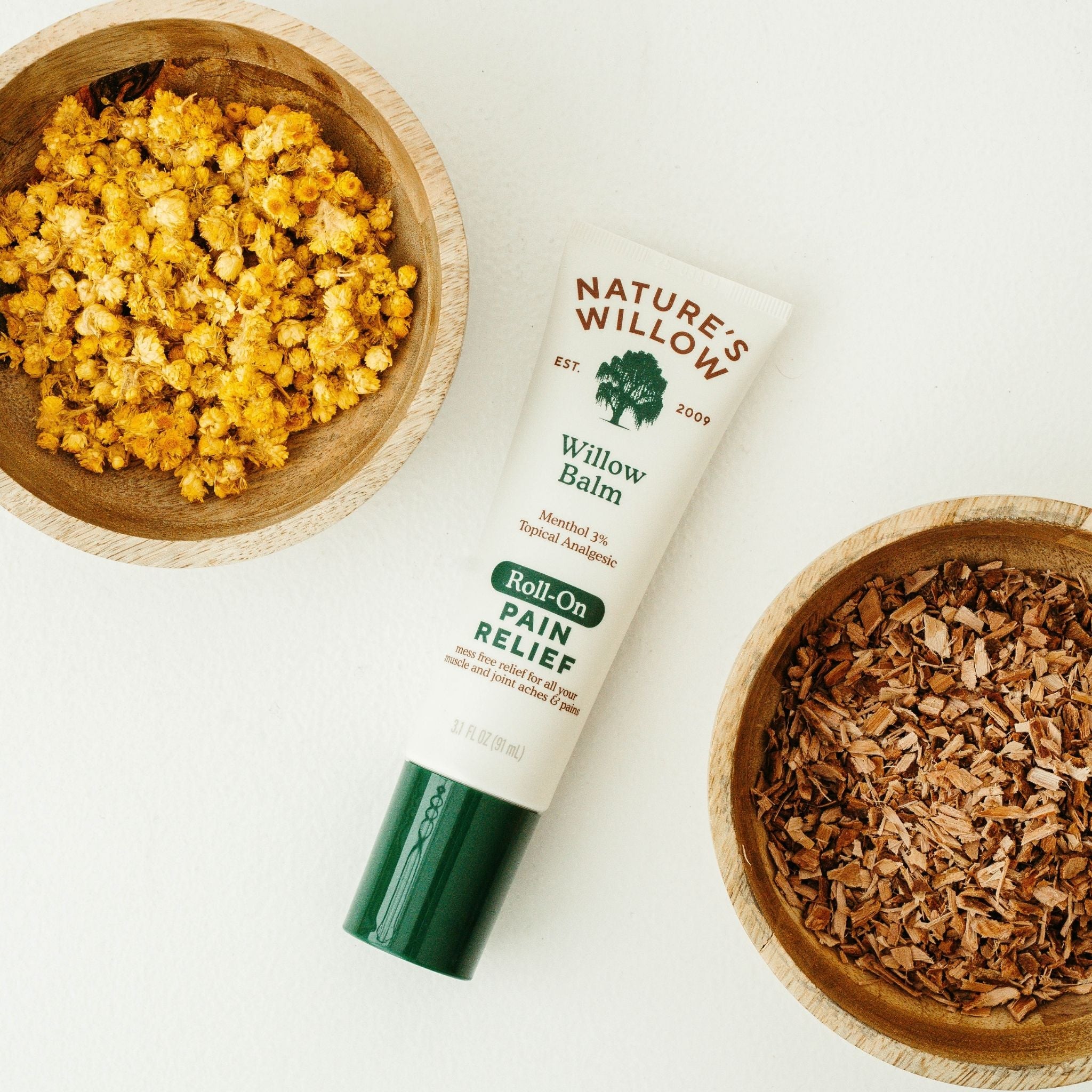
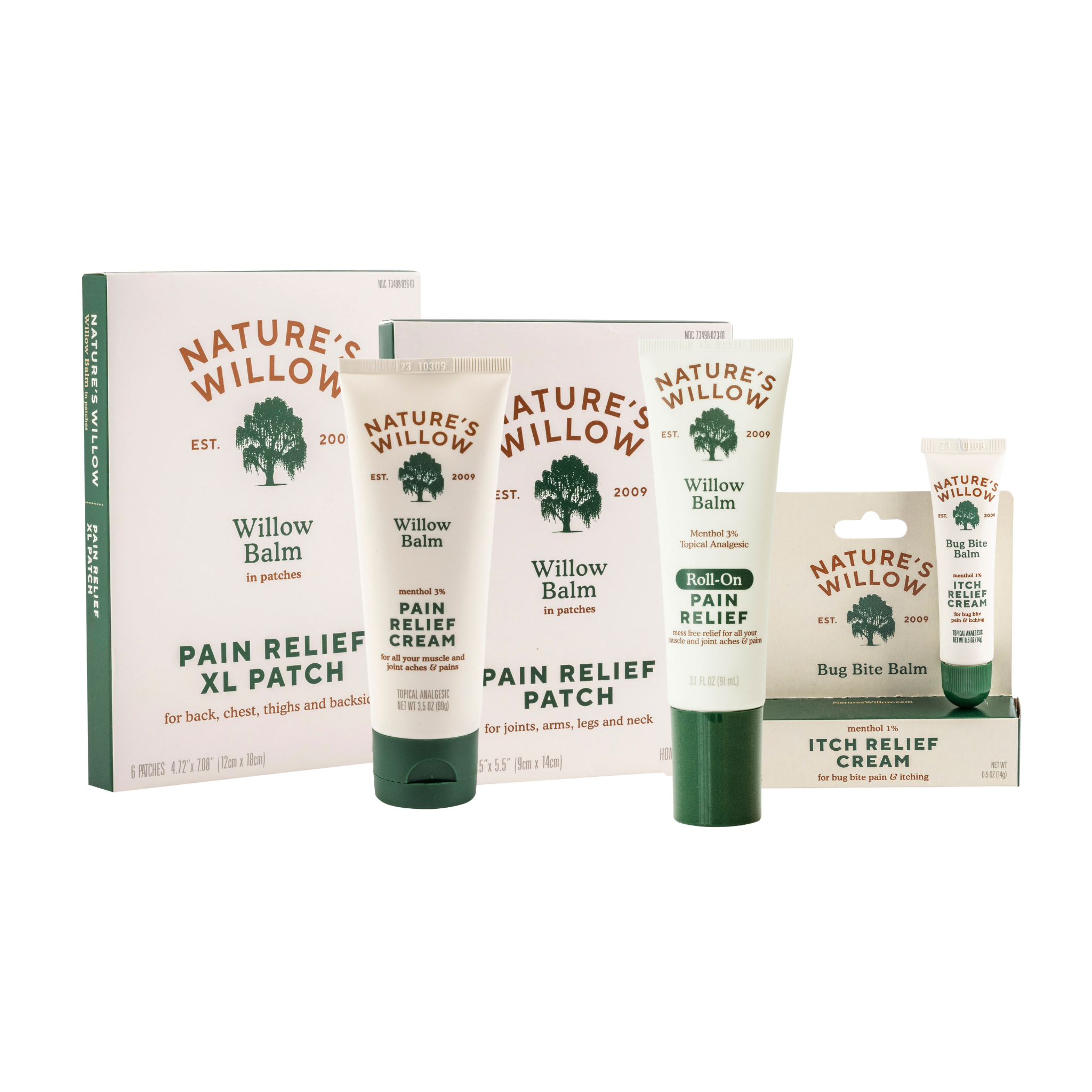
This guide fixes that. We'll walk through what a topical analgesic actually is, which active ingredients are backed by research, how to read a label so you're not guessing, and what to look for if you're buying for aging joints, sensitive skin, or a job that doesn't allow you to smell like a locker room. If you want to skip ahead and compare real options, our all natural pain relief cream lists active ingredients and concentrations on every product page, which is more than most brands do.
What Is a Topical Analgesic, Really?
A topical analgesic is any medicated itch cream, gel, natural pain relief patches, or pain roll-on relief applied directly to the skin over a painful area. Unlike a pill, it doesn't have to travel through your bloodstream to work, which is why people managing chronic pain often prefer it. Fewer systemic side effects, less risk of drug interactions, and no worrying about what it's doing to your stomach lining.
Most over-the-counter pain creams fall into one of these families:
✓ Counterirritants (menthol, camphor, methyl salicylate): create a cooling or warming sensation that overrides pain signals at the skin level
✓ Salicylates (including willow bark extract, the plant source aspirin was originally derived from): traditionally used for mild anti-inflammatory action
✓ Capsaicin: derived from chili peppers, works by desensitizing pain receptors over repeated use
✓ NSAIDs (diclofenac gel): a topical version of the same anti-inflammatory drug class as ibuprofen
✓ Lidocaine: a local anesthetic that numbs the area rather than treating inflammation
An overview of Cochrane Reviews on topical analgesics found that some topical analgesics can produce very good pain relief for some people with acute or chronic pain, though the bigger challenge is matching the right product to the right person rather than finding one universal best option. In plain terms: there's no single winner. There's a right match for your type of pain.
Topical Analgesic Comparison: What Each Type Actually Does
|
Type |
Best For |
How Fast It Works |
Typical Downside |
|
Menthol / Camphor Cream |
Muscle soreness, general aches, joint stiffness |
Minutes |
Strong smell, can feel too intense on large areas |
|
Willow Bark / Salicin Cream |
Every day aches, sensitive users, and daily use |
Gradual, builds with use |
Less research depth than NSAIDs |
|
Capsaicin |
Nerve pain, diabetic neuropathy, osteoarthritis |
Days to weeks |
Burning sensation at first, needs consistent use |
|
Diclofenac Gel (NSAID) |
Small joint inflammation (hands, knees) |
Hours |
Requires monitoring with long-term use |
|
Lidocaine Patch / Gel |
Nerve pain, post-shingles pain |
Fast, numbing |
Prescription-strength costs more, not for daily general aches |
Counterirritants such as menthol, methyl salicylate, and camphor create a burning or cooling sensation that distracts your mind from the pain, which is why they're the most common active ingredients in natural and drugstore pain creams alike (how counterirritants work).
Does Menthol Really Relieve Pain? The Science, Explained Simply
Menthol doesn't reduce inflammation or repair tissue. What it does is bind to a cold-sensing receptor in your skin called TRPM8, which floods your nervous system with a cooling signal. Your brain can only prioritize so much sensory input at once, so the cold sensation competes with and partially overrides the pain signal coming from the same area. It's less “healing” and more “your brain gets distracted.”
That's not a knock against it. Distraction-based pain relief is real, fast, and has almost no systemic risk, which is exactly why it's the backbone of most OTC topical analgesics, natural or not. We go deeper into the receptor science and how concentration affects strength in our post on how menthol and counterirritants actually work on skin and nerves, if you want the full breakdown.
The practical takeaway: menthol is genuinely useful for muscle soreness, tension, and joint stiffness where the goal is fast, temporary relief. It is not the right tool for nerve pain or deep inflammation, where capsaicin or an NSAID gel tends to perform better. For a deeper look at the evidence behind plant-based topical actives specifically, the research on natural herbal topical pain relievers is a useful point.
Best Pain Relief Cream for Joints
Joint pain, especially arthritis, behaves differently from muscle soreness. It's often chronic, flares with weather changes, and sits close to the skin (knees, knuckles, wrists), which actually makes it a good candidate for topical treatment since the medication doesn't have to penetrate deep tissue.
Mayo Clinic's guidance on topical arthritis treatments recommends capsaicin for knee and hand osteoarthritis, since it blocks a chemical in nerve cells that sends pain messages, though it works best when used several times a day and may take up to two weeks to feel relief. For daily, ongoing joint discomfort, a willow bark or menthol-based cream tends to be the more practical daily option since it works immediately and doesn't require the burn-in period capsaicin does.
If arthritis is your main concern, look for:
✓ A cream, not just a “gel,” since creams generally absorb better around knuckles and knees without feeling sticky
✓ No burning ingredient if you'll be applying it several times a day, since capsaicin's initial burn can get uncomfortable with frequent reapplication
✓ A formula you'd actually use consistently, since these creams work best when combined with regular movement and exercise recommended by a healthcare professional, not as a one-time fix
What Makes a Pain Cream “Natural,” and Does It Actually Change the Result?
Most mainstream, drugstore-shelf pain rubs lean on the same counterirritant mechanism, menthol or methyl salicylate, that natural creams do. The mechanism isn't usually what separates a natural formula from a conventional one. It's the ingredient list surrounding that active.
Conventional formulas often include synthetic fragrances, artificial dyes, and parabens, added mainly for shelf appeal and scent intensity rather than for pain relief itself. A natural formula worth considering will typically:
✓ Swap synthetic fragrance for essential oils like lavender, eucalyptus, or geranium
✓ Use willow bark (salicin) alongside or instead of methyl salicylate
✓ Skip parabens, phthalates, and artificial dyes
✓ Still use a real, listed percentage of an active ingredient, since “natural” doesn't mean “no active ingredient”
That last point matters more than people think. A cream can be 100% plant-derived and still do very little if the active ingredient concentration is too low to matter. Read the “Active Ingredients” line on the back, not just the front label. A genuinely well-formulated natural cream should hold up against a conventional one on efficacy, and beat it on what's missing from the ingredient list.
What to Look for in a Pain Cream: A Real Checklist
Before buying, run any cream through this list:
✓ Is there a listed active ingredient and percentage? If the front says “natural” but the back has no Drug Facts panel or active ingredient percentage, it's likely a cosmetic, not a pain reliever.
✓ Does the ingredient match your pain type? Menthol/camphor for general aches, capsaicin for nerve pain, willow bark for daily gentle use.
✓ Is it paraben-free, if that matters to you? Parabens are preservatives that some people prefer to avoid on frequently applied skin products.
✓ How strong is the smell? If you're applying it at work or before sleeping next to someone, a lighter essential oil scent will serve you better than a heavy medicinal one.
✓ Cream, gel, or patch? Creams absorb well into joints and larger areas. Patches suit people who don't want to touch the product or need it to stay put under clothing.
✓ Any allergy flags? Check for aspirin sensitivity if the product contains salicylates, since salicylates are what relieve pain in aspirin and can cross-react in people with aspirin allergies.
Natural Pain Relief Cream for Older Adults
Older skin is thinner, dries out faster, and absorbs topical ingredients differently than younger skin. A few things matter more here than for a younger user:
✓ Lower menthol/camphor concentration tends to be more comfortable on thin, sensitive skin. A cream advertised as “cooling, doesn't burn” is usually the gentler pick, a point Mayo Clinic's overview of topical pain relief options also raises for older users with thinner skin.
✓ Blood thinners and aspirin allergies are a real consideration with any salicylate-based product, including willow bark. If you're allergic to aspirin or are taking blood thinners, check with your doctor before using topical medications that contain salicylates.
✓ Fragrance sensitivity increases with age for many people, so a lighter-scented formula is often the more comfortable daily choice.
✓ Simplicity of application matters. A roll-on or pump is easier on arthritic hands than unscrewing a cap or squeezing a stubborn tube.
This is a case where “ask your doctor first” isn't just a liability disclaimer. It's genuinely the safer move if there's any medication overlap.
Pain Relief Cream Without a Strong Smell
If you've avoided pain creams because you don't want to smell like a physical therapy clinic all day, you're not alone, and this is one of the more searched frustrations in this category. The strong smell in most creams comes from high concentrations of menthol, camphor, or methyl salicylate, since these compounds are inherently pungent.
Lower-odor options typically achieve this by:
✓ Using a lower percentage of menthol (light cooling instead of intense)
✓ Replacing methyl salicylate with willow bark extract, which has little to no scent on its own
✓ Adding mild essential oils like lavender or geranium to soften the medicinal note rather than masking it with a synthetic fragrance
If discretion matters for work or social settings, check the ingredient list for the word “subtle” or “light” scent claims, and confirm the active ingredient percentage is still clearly listed. Low odor should not mean low effectiveness; it usually just means a different active ingredient was chosen.
Topical Pain Reliever That Isn't a Drug
This is a genuinely useful distinction that most content online glosses over. Some topical pain products are regulated as OTC drugs under an external analgesic monograph (these will have a “Drug Facts” panel listing active ingredients like menthol or camphor with a percentage). Others are marketed as homeopathic or cosmetic products and don't carry that same drug classification.
Neither category is automatically better. What matters is that a genuine topical analgesic, drug-classified or homeopathic, will still name its active ingredients and their role. If a product makes pain-relief claims but has no active ingredient listed anywhere, that's the real warning sign, not whether it's technically a “drug.”