
|
Quick Answer The most effective natural knee pain relief combines four things: gentle, low-impact movement to keep the joint lubricated, a modest reduction in body weight to cut down on joint load, heat or cold therapy during flare-ups, and a topical analgesic, like willow bark or menthol cream, for on-the-spot comfort. Together, these can ease pain without relying on daily pills. |
If your knee has started talking to you every time you take the stairs, stand up from the couch, or go for a walk, you already know how much it can shrink your world. You start avoiding the long way round. You wince before you even move. And if you've been leaning on ibuprofen just to get through the day, you've probably also started wondering what that's doing to your stomach over the long run.
You're not alone in this, and you're not out of options. A growing number of people are looking for natural knee pain relief that doesn't start and end with a pill bottle. Real, evidence-backed ways to move better, calm inflammation, and manage pain day to day. Some of that comes down to habits: how you move, how you sit, how you sleep. Some of it comes down to what you put on your skin. Natural topical options, like those from Nature's Willow, have become a go-to for people who want relief that works with their body instead of just numbing the signal. This guide walks through what actually helps, what's mostly marketing, and how to build a routine that fits your knees specifically.
Why More People Are Rethinking the Pill Bottle
Oral NSAIDs like ibuprofen work by blocking inflammation throughout your entire body, not just in your knee. Taken occasionally, that's usually fine. Taken daily for weeks or months, they've been linked to stomach irritation, ulcers, and cardiovascular strain, which is exactly why so many people start searching for knee pain relief without medication, or specifically, how to relieve knee pain without ibuprofen.
Interestingly, even mainstream medicine has been shifting toward the skin instead of the stomach. Rheumatologists increasingly reach for topical treatments first for knee osteoarthritis, precisely because they act locally and skip most of the systemic side effects that come with swallowing a pill.
First, Get a Read on What Kind of Knee Pain You're Dealing With
Not all knee pain behaves the same way, and the right natural approach depends on the cause.
- Overuse or strain: A dull ache after a long walk or workout, usually eases with rest and comes back predictably with activity.
- Osteoarthritis (knee arthritis): Morning stiffness that loosens up after 15–20 minutes of movement, a grinding sensation, and pain that builds gradually over months or years.
- Mechanical or alignment issues: Pain concentrated on stairs, hills, or when standing up from sitting, often behind or around the kneecap.
- Acute injury: Sudden pain after a twist or impact, especially with swelling, instability, or an inability to bear weight.
A lot of people search for knee pain when walking specifically because that's when the problem becomes impossible to ignore; every step is a reminder. If your knee pops or clicks but doesn't hurt or give way, that's usually just cartilage and tendons moving over bone, and it's common even in healthy knees. What actually matters is pain, swelling, locking, or a knee that buckles. Those are the signs worth getting checked rather than managed at home.
Home Remedies for Knee Pain That Actually Move the Needle
These are the habits with real evidence behind them, not just folk wisdom.
1. Rest the injury, not the joint
For a fresh strain or sprain, RICE (rest, ice, compression, elevation) is still the standard first 48 hours of care. But for arthritis or chronic knee pain, complete rest backfires. Movement is what keeps synovial fluid, your knee's natural lubricant, circulating. Total stillness tends to make stiffness worse, not better.
2. Use heat and cold with intention
Cold calms a fresh flare-up or swelling; heat loosens a joint that's stiff from arthritis or inactivity. A lot of people alternate: ice after activity, heat before it, especially first thing in the morning when knees are at their stiffest.
3. Lose even a small amount of weight, if you're carrying extra
This is the single most underrated lever for knee arthritis relief. Research cited by the Arthritis Foundation found that every pound of body weight lost removes roughly four pounds of pressure from the knee joint with each step. Lose 10 pounds, and you're taking around 40 pounds of load off your knees every time you walk. You don't need a dramatic transformation; even 5–10% of body weight has been shown to meaningfully improve pain and function.
4. Move, just move the right way
Low-impact activity like swimming, cycling, or walking on flat ground strengthens the muscles that support your knee without hammering the joint itself. Building up your quads, hamstrings, and hips takes pressure off the knee joint directly, since stronger muscles absorb more of the shock that would otherwise land on cartilage.
5. Check your footwear and walking surface
Worn-out shoes or the wrong support can throw off your gait and concentrate stress on one side of the knee. If knee pain when walking is worse on hard pavement or in flat, unsupportive shoes, a cushioned insole or a shoe with better shock absorption is often a bigger fix than people expect.
Natural Anti-Inflammatory Options for Your Knees
If you're looking for a natural anti-inflammatory for knees, diet and targeted plant compounds are where the research is strongest.
- Turmeric/curcumin: A 2021 systematic review covered by the National Center for Complementary and Integrative Health (NCCIH) found that turmeric had a beneficial effect on knee osteoarthritis pain and function comparable to NSAIDs, though optimal dosing is still being studied.
- Omega-3s: Fatty fish like salmon and sardines contain compounds your body can use to help dial down inflammatory signaling over time.
- Ginger: Commonly paired with turmeric for its circulation and anti-inflammatory support, usually as tea or in cooking.
- Willow bark: Sometimes called "nature's aspirin." Willow bark contains salicin, a compound chemically related to aspirin with pain- and fever-reducing effects, and it's traditionally used for back pain, osteoarthritis, and muscle pain. This is also the active plant compound behind most natural topical pain creams, which we'll get into next.
Choosing the Best Topical for Knee Pain
A knee pain relief cream is often the fastest natural fix in your toolkit, and dermatologists point out that thin-skinned joints like knees and knuckles actually absorb topicals better than thicker-skinned areas like the lower back. But not all creams work the same way, and "natural" gets used loosely on packaging. Here's what's actually in most knee pain relief creams and how each one works:
|
Ingredient |
How it works |
Best for |
Note |
|
Menthol/camphor |
Counterirritant, tricks cold/warm receptors so the brain is distracted from deep joint pain |
Fast, short-term cooling relief before activity |
Sensation only; doesn't reduce inflammation |
|
Capsaicin |
Depletes substance P, a pain-signaling chemical, with repeated use |
Chronic daily use, arthritis flare-ups |
Needs 1–2 weeks of consistent use; wash hands after applying |
|
Topical diclofenac (NSAID) |
Delivers an anti-inflammatory drug straight into the joint tissue |
Moderate to severe osteoarthritis pain |
Still a medication, not a "without medication" option |
|
Willow bark (salicin) |
Plant-based compound the body converts into salicylic acid, aspirin's active relative, applied topically. |
People who want a natural, non-NSAID option for daily use |
Not the same as taking aspirin; no oral dosing to track |
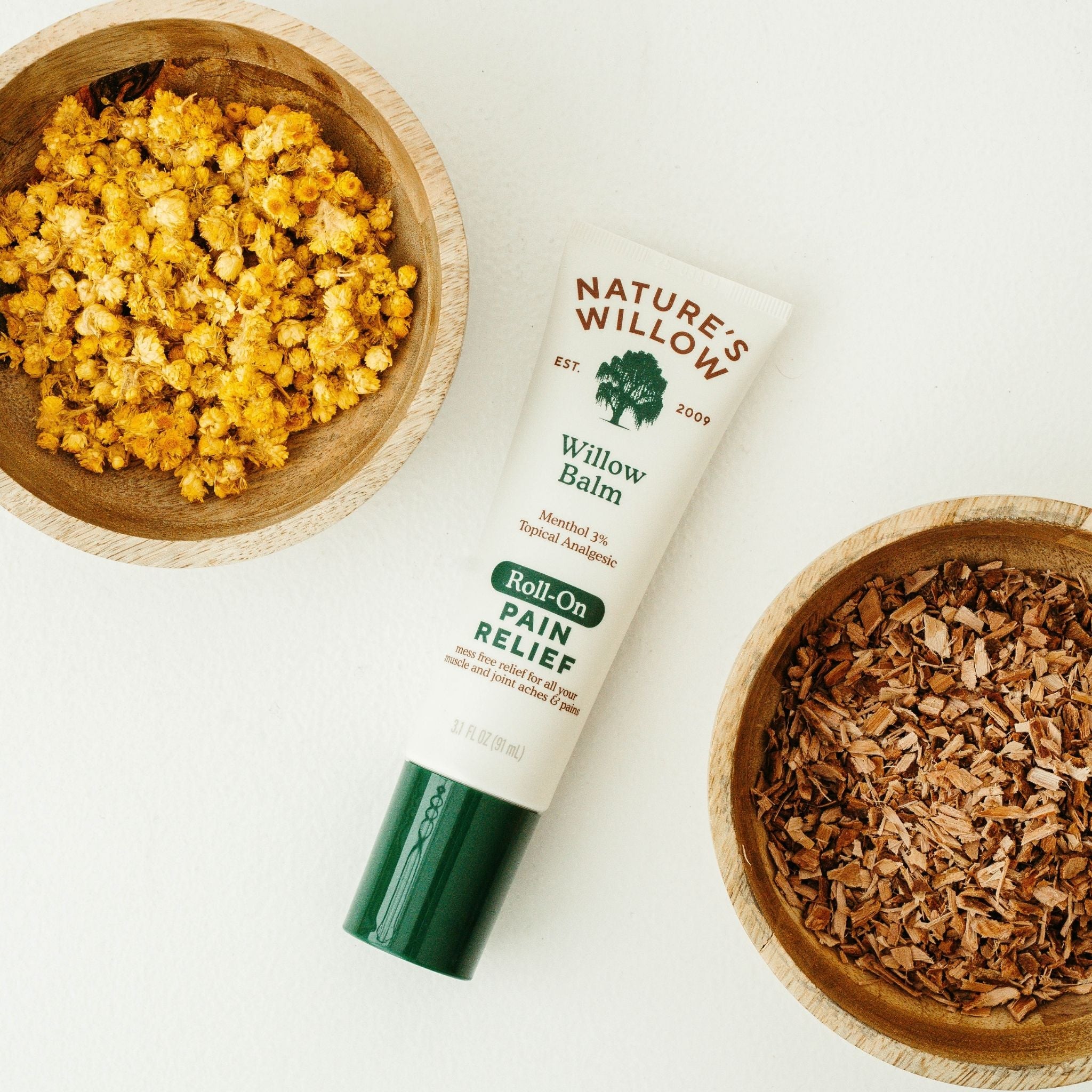
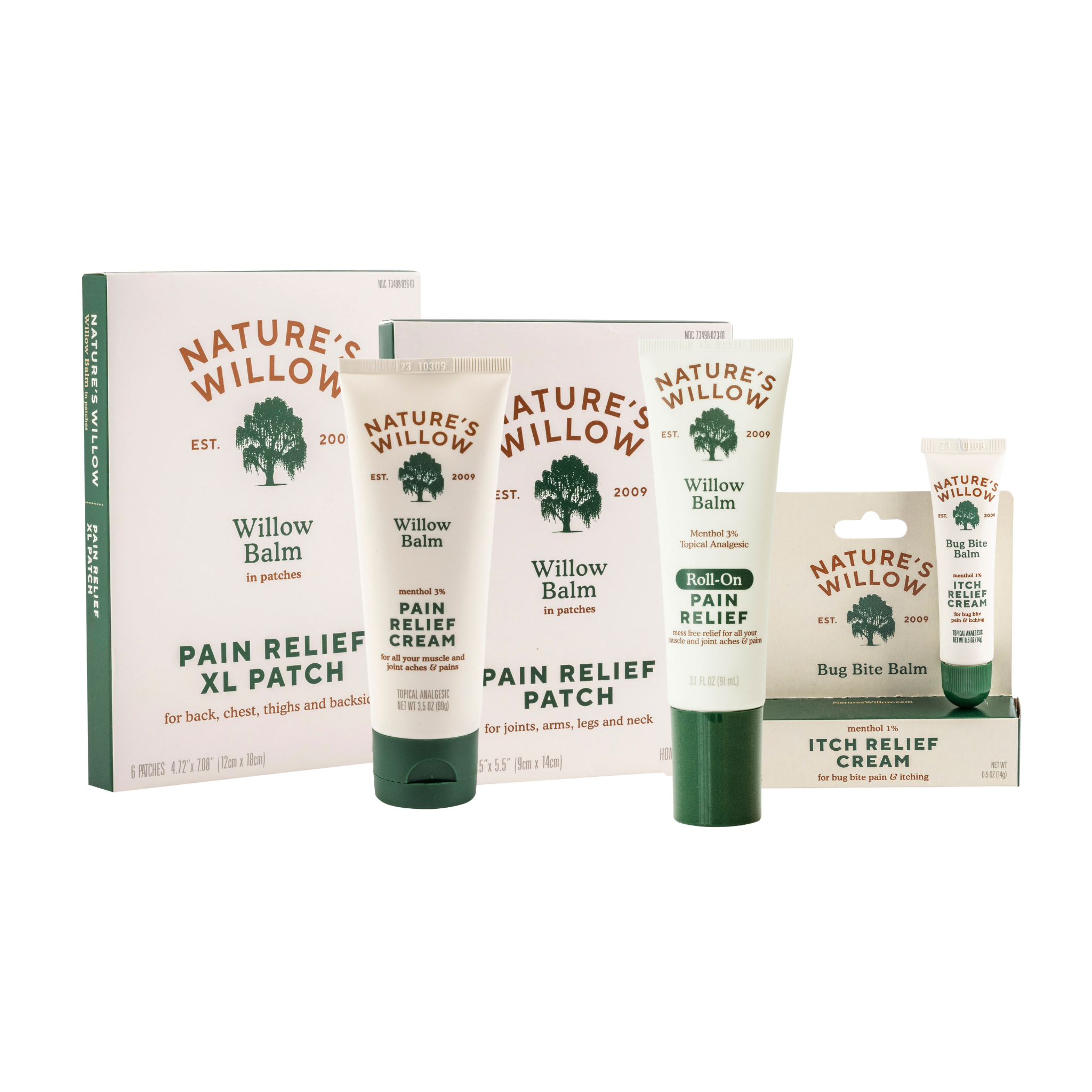
If your goal is to avoid oral pain medication or NSAID gels, look for topical relief built around willow bark and plant-based counterirritants. Nature’s Willow’s Pain Relief Bundle gives you both options: fast-absorbing pain relief cream for everyday use and targeted pain patches that provide up to eight hours of relief. Both feature white willow bark and helichrysum, with menthol for an immediate cooling sensation, and are free from artificial dyes, parabens, and added fragrance. Keep the cream nearby for knees that feel sore after a long day, then reach for a patch when you need longer-lasting, hands-free support.
Curious about what actually makes a natural pain relief cream that works, versus one that's just scented menthol? We broke down the science behind cooling topicals in Does Menthol Really Relieve Pain? How Topical Menthol Works, and How to Use It Right, including how menthol and willow bark work together rather than against each other.
Knee Arthritis Relief: Building Habits for the Long Game
Arthritis isn't something you fix in a week, so consistency matters more than intensity. A realistic daily routine for knee arthritis relief looks something like this:
- A 10-minute morning warm-up before you're on your feet for the day, gentle bends, ankle circles, and a short walk around the house.
- Two to three low-impact strength sessions a week focused on hips, quads, and glutes.
- Applying a topical cream before activity you know tends to trigger pain, rather than waiting until it flares.
- Pacing activity across the day instead of doing everything in one long stretch.
Knee Pain Relief for Older Adults at Home
The core approach for knee pain relief for older adults at home is the same, with a few adjustments that prioritize safety:
- Choose chair-based or wall-supported exercises over floor routines to reduce fall risk.
- Prioritize stable, supportive shoes indoors, not just outdoors; many falls happen in socks or slippers on hard floors.
- Keep a grab bar or sturdy furniture nearby during standing exercises.
- Apply topical relief before, not just after, activities like gardening or grocery trips, so discomfort doesn't build up unnoticed.
- Loop in a physical therapist for a short course of guided exercises; even a handful of sessions can correct movement patterns that are quietly making pain worse.
When to Stop Self-Treating and Call a Doctor
Natural and at-home options are genuinely effective for most everyday knee pain, but some signs mean it's time for a professional opinion rather than another home remedy:
- Visible swelling that doesn't improve within a few days
- A knee that gives way, locks, or feels unstable
- Pain that wakes you up at night or doesn't ease with rest
- Redness or warmth around the joint, which can signal infection or gout
- Pain following a clear injury, fall, or sudden twist
|
Keep Relief Within Reach Whether it's a long day on your feet or an arthritis flare-up you saw coming, having a natural topical on hand makes it easier to stay ahead of knee pain instead of chasing it. Explore Nature's Willow's full pain relief collection to find a willow bark formula that fits your routine. |