
QUICK ANSWERTo relieve sore muscles after a workout, keep the affected muscles gently moving, avoid another intense session on the same muscles, try light massage or foam rolling, use warmth for stiffness, and stay hydrated with a balanced meal and enough sleep. Most delayed-onset muscle soreness improves within a few days on its own. Sharp pain, major swelling, weakness, or dark urine needs medical attention. |
If you can barely walk down the stairs two days after leg day, you already know this feeling. Your muscles feel tight, tender, and heavy, and every movement reminds you that you worked hard. It is uncomfortable, but for most people, it is not a sign that anything went wrong.
This is called delayed-onset muscle soreness, or DOMS, and it is one of the most common experiences in fitness, whether you just started working out or you have been training for years. At Nature's Willow, we hear about this constantly from people who train hard, so here is what is actually happening and what genuinely helps you feel better while your muscles repair.
What Causes Muscle Soreness After Exercise?
There are two different types of soreness, and it helps to know which one you are dealing with.
Acute soreness happens during or right after a workout. It is the burning or fatigue you feel mid-set, and it fades within a short time.
DOMS is different. It shows up later, usually starting 12 to 24 hours after your workout and often peaking between 24 and 72 hours after you trained, according to Cleveland Clinic. It happens because your muscle fibers experience tiny amounts of stress and damage, especially from movements where a muscle lengthens under load, like the lowering phase of a squat or a slow bicep curl. Your body repairs those fibers over the following days, which is part of how muscle gets stronger over time.
One common myth worth clearing up: DOMS is not caused by lactic acid building up in your muscles. Lactic acid clears out of your system within an hour or so of exercise. The soreness you feel two days later comes from the repair process, not leftover lactic acid.
How Long Does Post-Workout Soreness Actually Last?
Here is a simple timeline of what to expect:
|
Timeframe |
What's Happening |
What It Feels Like |
|
Right after training |
Muscle fatigue from the workout itself |
Burning or fatigue in the muscle |
|
12–24 hours later |
DOMS begins to set in |
Mild tightness or tenderness |
|
24–72 hours later |
Soreness reaches its peak |
Stiff, sore, sometimes hard to move normally |
|
After 72 hours |
Muscle repair continues |
Symptoms gradually ease, usually gone within a week |
If soreness is still severe or getting worse well past a week, that is worth mentioning to a doctor rather than assuming it will pass on its own.
9 Ways to Relieve Sore Muscles After a Workout
-
Keep moving gently.
Light activity, like an easy walk or gentle stretching, helps blood flow to sore muscles without adding more strain.
-
Skip another intense session on the same muscles.
Training the same sore muscle group hard again before it has recovered does not toughen it up faster. It just adds more damage on top of damage that has not healed yet.
-
Try massage or foam rolling.
Massage is one of the better-supported options for easing DOMS. Research comparing recovery techniques has found massage to be effective at reducing soreness and inflammation markers, and foam rolling after exercise has also been shown to reduce soreness and support strength recovery in clinical research.
-
Use warmth for stiffness and comfort.
Heat helps relax tight muscles and can make general stiffness more bearable.
-
Consider cold treatment selectively.
Cold can offer short-term relief, particularly right after intense training, though it is not a universal fix for every kind of soreness.
-
Rehydrate after a sweaty session.
Fluid loss adds to that generally worn-out feeling, separate from the muscle soreness itself.
-
Eat protein and carbohydrates.
Your muscles need building blocks and energy to repair themselves. A balanced meal after training supports that process.
-
Prioritize sleep.
Most repair and recovery happens while you rest, so skimping on sleep slows down how quickly you bounce back.
-
Use a topical relief product for localized discomfort.
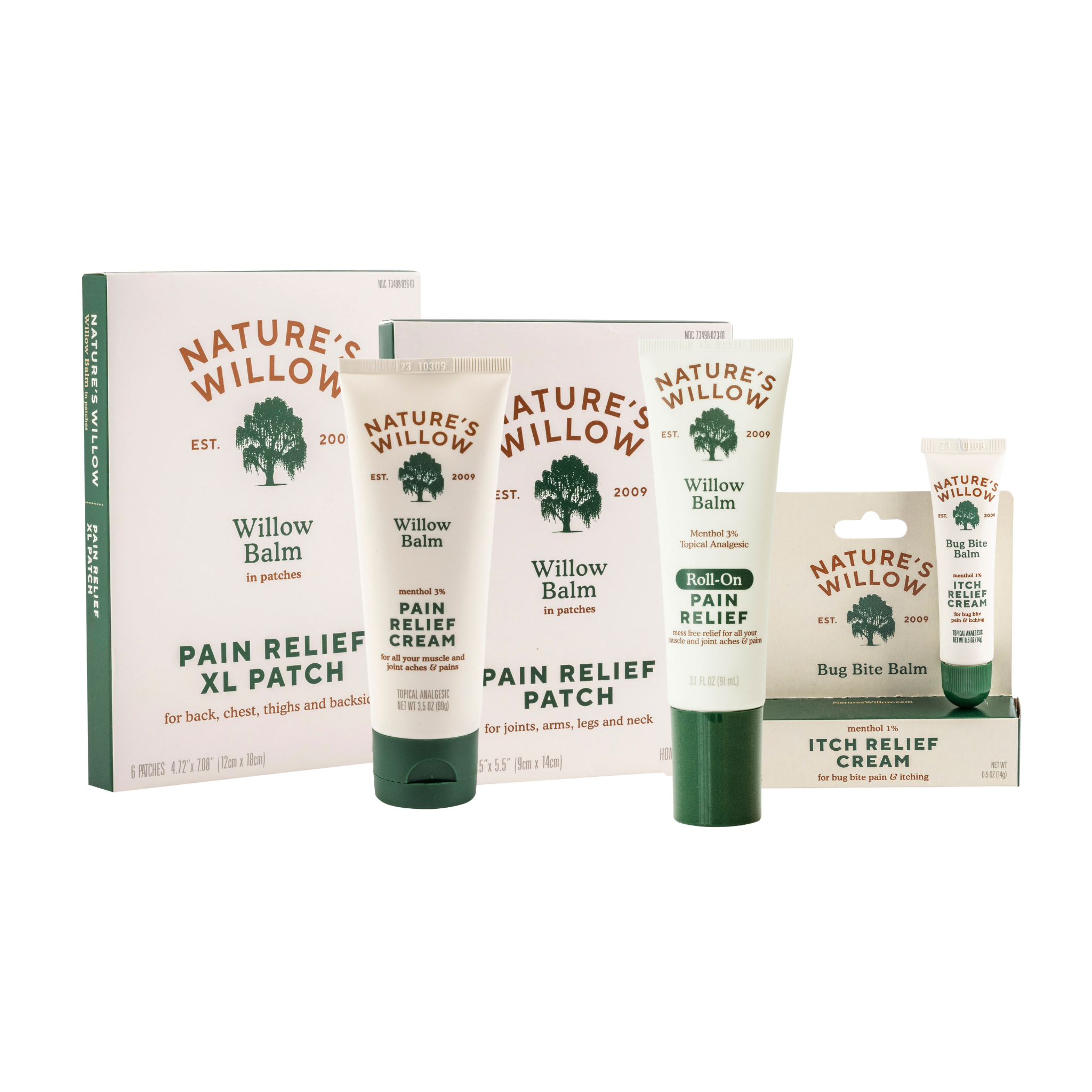
A cream like Nature's Willow's pain relief cream can help take the edge off sore calves, quads, or shoulders while your muscles do the actual work of repairing. It will not speed up healing, but it can make the days in between more comfortable. Topical menthol-based products in particular have research support for easing exercise soreness and have even outperformed ice treatment in some studies.
Heat or Ice: Which Is Better for Sore Muscles?
There is no single right answer here. It depends on what you need:
|
Heat |
Ice |
|
Best for general stiffness and tight, achy muscles a day or two after training. |
Can help more with sharp discomfort right after an intense session. |
|
Safer default for ordinary DOMS, since it is not an acute swelling injury. |
Evidence on how much it changes the overall course of DOMS is mixed. |
If you are unsure, heat is usually the safer default for ordinary post-workout soreness, since DOMS is not an acute injury with swelling in the way a sprain is.
What If the Pain Is Around Your Knee?
Muscle soreness in your quads, hamstrings, or calves can sometimes feel as though it is coming from around the knee. But pain that feels deep inside the joint, causes visible swelling, makes the knee lock or give way, or makes it difficult to bear weight may not be ordinary post-workout muscle soreness.
A NOTE ON KNEE PAINDo not use a recovery treatment simply to cover up knee pain and continue training. First, reduce the activity that aggravates it and pay attention to how the joint responds. For a more focused breakdown of heat, cold, movement, topical relief, and warning signs, read our guide to natural knee pain relief and at-home options that work. |
Should You Work Out When Your Muscles Are Sore?
This depends on how sore you actually are.
- Mild soreness: light exercise, or training a different muscle group, is usually fine.
- Moderate soreness: consider reducing your training load or working around the sore area instead of directly on it.
- Severe soreness or limited movement: rest that area and pay attention to whether the pain feels different from ordinary DOMS.
Pushing through significant soreness with another hard session on the same muscles does not build resilience faster. It just delays recovery.
What Not to Do When Your Muscles Are Sore
- Do not repeat a heavy workout on the same muscle group just to "push through it"
- Do not force aggressive stretching on a muscle that is genuinely painful, not just tight
- Do not massage an area if you suspect an actual injury rather than ordinary soreness
- Do not treat sharp, stabbing pain as normal DOMS
- Do not use pain relief products to mask pain so you can keep training through it unsafely
How to Prevent Severe Soreness After Future Workouts
You cannot eliminate DOMS, especially when you try a new activity or increase intensity. But you can reduce how severe it gets:
- Progress gradually instead of jumping straight into high-intensity training
- Warm up properly before intense or unfamiliar movements
- Stay hydrated and eat enough around your training days
- Allow adequate recovery time between demanding sessions targeting the same muscles
When Muscle Soreness Needs Medical Attention
Ordinary DOMS is uncomfortable but not dangerous. See a doctor if you notice:
WARNING SIGNS
|
According to the CDC, these can be signs of a more serious muscle injury and are worth getting checked rather than waiting out.