
QUICK ANSWERThe best outdoor pain relief for hiking and camping combines a topical natural pain cream for sore muscles and joints with a dedicated bug bite balm for insect bites, plus basic prevention gear like insect repellent and proper footwear. Look for products with white willow bark and menthol, since both are backed by real research on how they reduce pain and inflammation. |
If you have ever pulled off your boots after a long trail day and felt every mile in your knees, or scratched a mosquito bite until it welted up, you know outdoor pain shows up in two forms: the ache that builds slowly and the sting that hits fast. Nature's Willow was built around exactly that problem. Their willow bark and menthol formulas are made for people who spend real time outside, not people testing products in a lab.
If you are prepping for a hike, a weekend of backpacking, or a full family camping trip, this guide walks through what actually works, why it works, and how to build an outdoor wellness kit you will not regret leaving at home.
Why Outdoor Pain Relief Needs Its Own Approach
Pain on the trail is not the same as pain on the couch. During hiking and other outdoor activities, your body deals with repetitive strain, uneven terrain, pack weight, sun exposure, and bug exposure all at once. A guide from Backpacker magazine notes that trail-related aches, sprains, and minor injuries are common enough that seasoned hikers carry a dedicated trail medicine kit rather than relying on whatever is in their bathroom cabinet at home.
That is the core idea behind outdoor pain relief: you need solutions that work fast, pack small, and do not require water, a kitchen, or a pharmacy nearby. This is different from home pain management. On the trail, you want something you can apply in seconds and trust to hold up through sweat, sunscreen, and bug spray.
Muscle Pain After Hiking: What Is Actually Happening
That deep soreness you feel a day after a long hike has a name: delayed onset muscle soreness, or DOMS. It happens when muscle fibers experience microscopic strain from unfamiliar or repetitive movement, such as a steep descent or hours on uneven footing. The soreness usually peaks 24 to 48 hours after the hike itself.
You cannot completely prevent DOMS, but you can manage it. This is where a natural pain cream earns its place in your pack. Unlike oral painkillers, a topical cream lets you target the exact muscle group, whether that is your calves after a steep climb or your lower back from carrying a loaded pack.
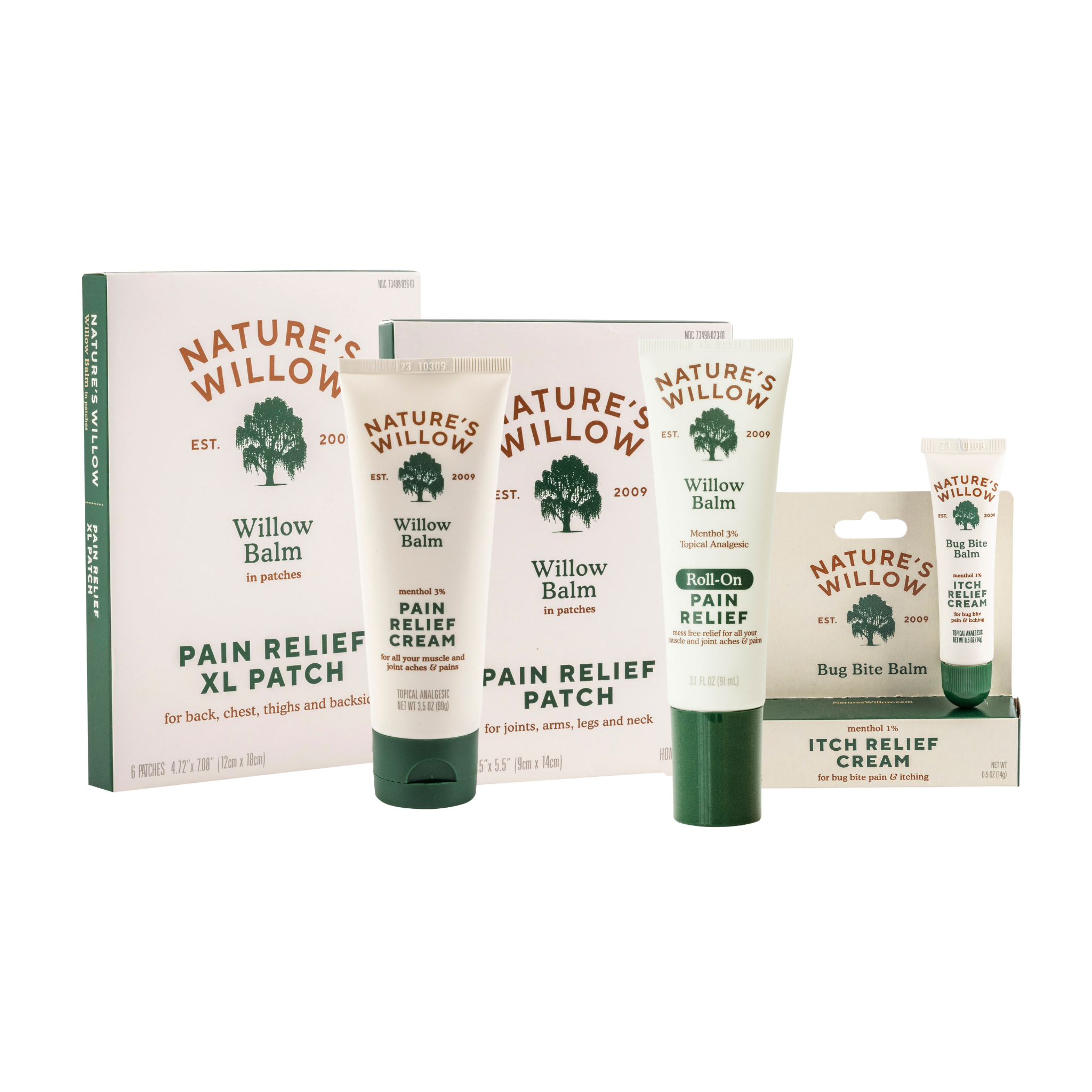
Nature's Willow's natural pain relief cream is built around white willow bark, an ingredient with a genuinely long research trail. White willow bark contains salicin, the same compound family that led to the development of aspirin. A randomized, placebo-controlled meta-analysis published in the journal Life reviewed multiple trials on willow bark for arthritis-related pain and found consistent analgesic benefit across studies. Separately, a clinical trial reported in Today's Practitioner found that patients using willow bark extract for chronic low back pain saw a meaningful reduction in pain scores compared with placebo over two weeks.
For hikers and backpackers specifically, that matters because willow bark works topically without needing to be swallowed or digested, so it delivers targeted relief right at the sore muscle or joint instead of circulating through your whole system.
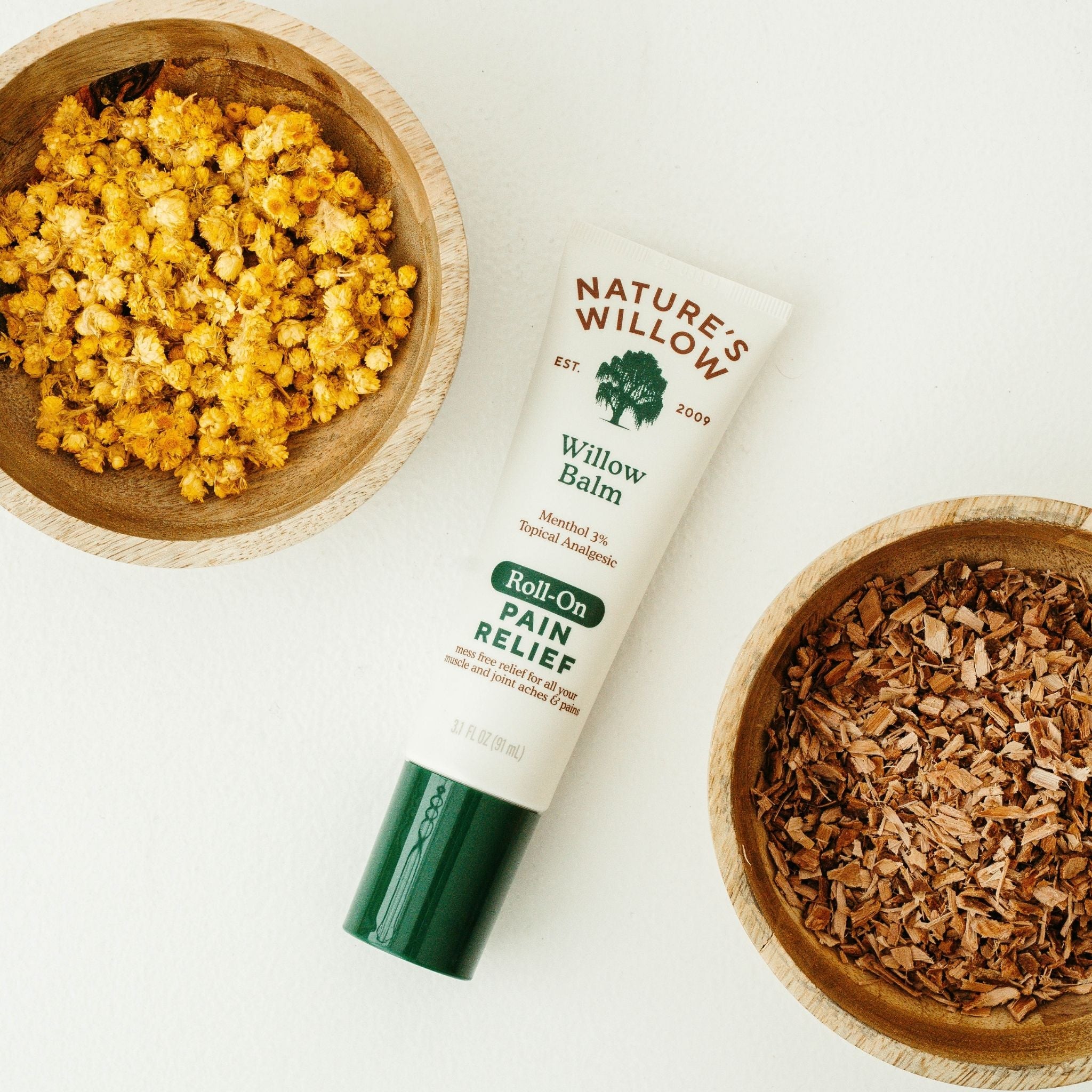
PACK ITIf you want something even easier to use on the move, the Roll-On Pain Relief is worth packing. It is mess-free, no need to rub cream into your hands mid-hike, and it fits in a hip belt pocket or side pouch without leaking. For backpacking and multi-day summer hiking trips where every ounce and every extra step matters, that kind of convenience is the difference between actually using it and leaving it at the bottom of your bag. |
How Does Menthol Work for Pain? The Science Behind the Cooling Effect
Menthol is the ingredient responsible for that instant cooling sensation you feel when you rub on a pain cream, and it is not just a sensory trick. Menthol activates a receptor in your skin's nerve endings called TRPM8, which is the same receptor responsible for detecting cold temperatures. Research published in Nature Communications confirms that menthol has been used for decades as an analgesic for acute, inflammatory, and even neuropathic pain because of how directly it interacts with this receptor.
Journal of Clinical Pharmacy and Therapeutics explains that menthol works as a counter-irritant. It creates a cooling sensation strong enough to momentarily override the deeper pain and inflammation signal your body is sending, and this effect can outlast the cooling sensation itself by hours in some studies.
We broke this down in more depth in Does Menthol Really Relieve Pain? How Topical Menthol Works, and How to Use It Right, including the ideal menthol percentage to look for and how it compares to camphor and methyl salicylate. It is a useful read if you want to understand exactly what you are putting on your skin before a big trip, rather than just trusting the label.
Bug Bite Relief and Insect Bite Relief: Prevention First, Treatment Second
Bug bites are one of the most predictable pain points of outdoor adventures, and prevention does most of the heavy lifting. The CDC recommends using an EPA-registered insect repellent, wearing loose, long-sleeved clothing, and treating clothing and gear with permethrin, which is an insecticide that repels mosquitoes and ticks without being applied directly to skin. The American Academy of Dermatology adds that tucking pants into socks and pre-treating outer clothing layers can meaningfully cut down on bites during hikes through wooded or grassy areas.
Even with solid prevention, bites happen. When they do, the CDC's guidance for treating mosquito bites includes washing the area with soap and water, applying a cold compress to reduce swelling and itch, and using an over-the-counter anti-itch or antihistamine cream. This is exactly where a dedicated bug bite balm earns a spot in your pack, separate from your muscle pain cream.
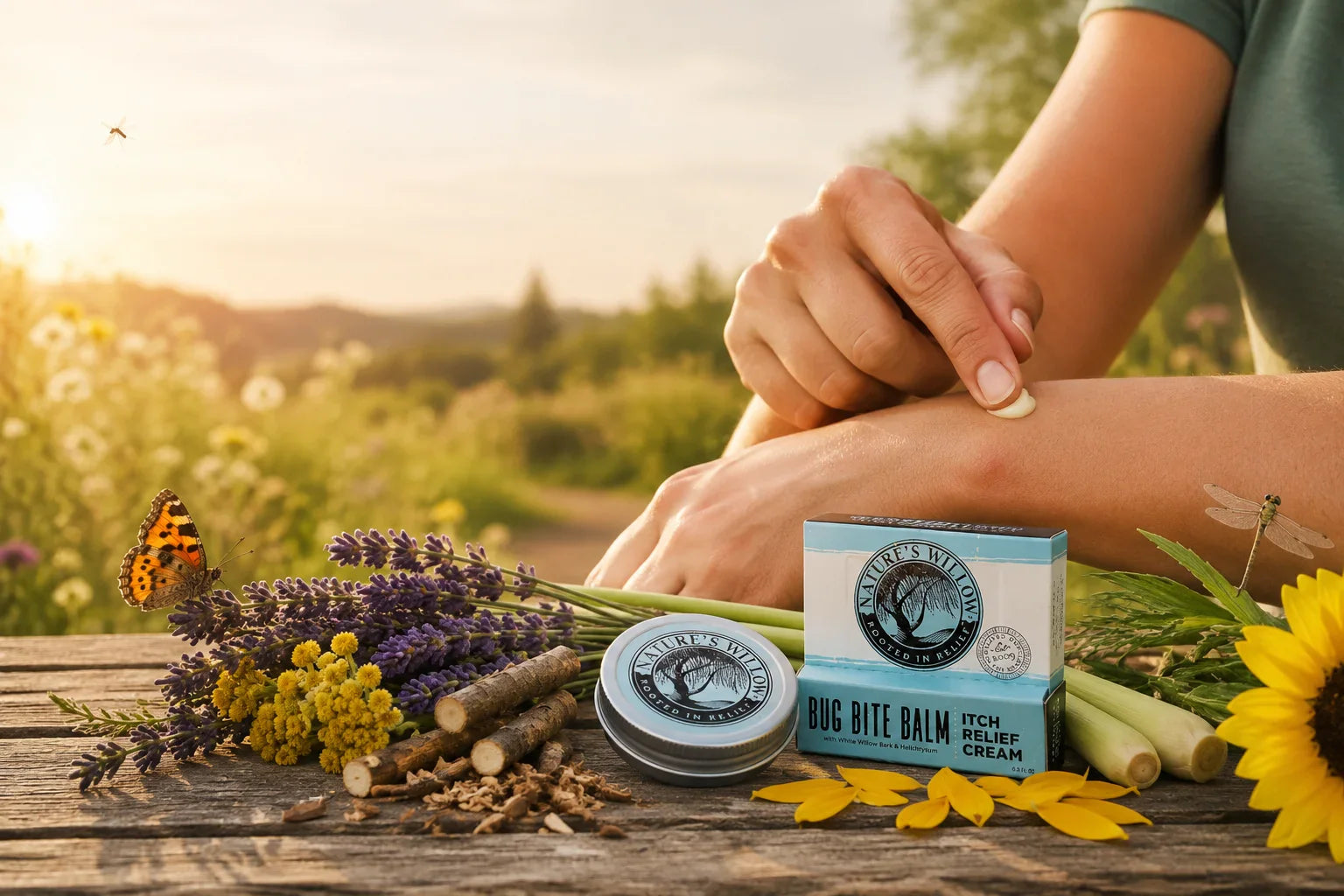
PACK ITNature's Willow's Bug Bite Balm is formulated specifically for insect bite relief rather than repurposed from a general pain cream, which matters because bite reactions involve itching and localized swelling, not just soreness. Reviewers on the product page consistently mention using it for mosquito bites picked up while gardening, camping, and hiking through brush, with reapplication throughout the day for ongoing relief. |
If bug bites are a recurring issue for your family or hiking group, pack both the balm and a repellent. Treating bites after the fact is never as effective as preventing most of them in the first place.
Family Camping Safety and a Simple Camping Checklist
Outdoor safety looks different when you are managing a family camping trip versus a solo backpacking trip. More people means more variables: kids running ahead on trails, more skin exposed to bug bites, and a wider range of pain tolerance and communication about discomfort.
A basic camping checklist for outdoor wellness should include:
CAMPING CHECKLIST
|
Building this into your prep routine before every trip, rather than improvising at the trailhead, is what actually prevents small discomforts from turning into a ruined weekend.
Building Your Outdoor Wellness Kit
A solid outdoor wellness kit for hiking and camping does not need to be complicated. At minimum, pack:
OUTDOOR WELLNESS KIT
|
Keep these together in one dedicated pouch so you are not digging through your whole pack when discomfort hits. That small habit is often what separates a trip where pain derails your plans from one where you barely notice it.