


Quick AnswerBack pain after gardening is usually a muscle strain from prolonged bending, twisting, and lifting. Stay gently active rather than resting in bed, apply heat or ice for 15–20 minutes at a time, and avoid heavy lifting for 2–3 days. Most soreness improves within 1–2 weeks. See a doctor if pain spreads down your leg, causes numbness, or doesn't improve after two weeks. |
You spent the afternoon weeding, digging, and hauling bags of soil, and now your back is telling you about it. If you're reading this because you can barely straighten up, you're not alone, and you're not overreacting. Gardening places real physical demands on your spine, and back pain after gardening is one of the most common complaints that physiotherapists and pharmacists hear during peak planting season.
Here's the short version: most gardening-related back pain is muscular, not serious, and it usually improves within a few days to two weeks with the right early care. But knowing what “the right early care” actually looks like, and knowing when pain is telling you something more than “you overdid it,” makes a real difference in how fast you recover. That's also where a natural pain relief cream earns its place in your gardening shed. It won't fix poor lifting form, but it can take the edge off while your body does the actual healing.
This guide walks you through exactly what to do in the first 72 hours, how to tell ordinary soreness from a strain or something that needs medical attention, which specific gardening tasks are usually the culprit, and how to garden again without repeating the cycle.
Why Does Gardening Cause Back Pain?
Gardening doesn't feel like exercise while you're doing it, which is exactly why it catches people off guard. You're not lifting a barbell or running a mile, but you are:
- Bending forward repeatedly for long stretches while weeding
- Twisting through the spine instead of pivoting your feet
- Lifting bags of soil, mulch, or pots with the load held away from your body
- Kneeling and crouching for extended periods
- Reaching overhead to prune, straining the upper back and shoulders
- Doing all of this after weeks or months of a fairly sedentary routine
This pattern has a name among physiotherapists: “gardener's back.” It's the same mechanism that causes weekend-warrior injuries in any activity your body isn't conditioned for. Cleveland Clinic describes this exact pattern in people who go from mostly sedentary routines straight into hours of bending, lifting, and kneeling without warming up first. You go from mostly sitting to two or three hours of sustained flexion and load, and your lower back muscles, which weren't warmed up or prepared for that volume, respond with inflammation and spasm.
This is also why the pain often shows up the next morning rather than immediately. While you're gardening, adrenaline and focus mask the strain. Once you cool down and rest, the muscles tighten, and the soreness becomes obvious, sometimes worse than it felt the day before.
Is It Normal Soreness, a Strain, or Something More?
Not all back pain after gardening is the same, and it helps to know roughly what you're dealing with before deciding how to treat it.
|
What You're Feeling |
What It Likely Means |
|
Dull, even soreness on both sides, worse the next morning |
Muscle fatigue from overuse, similar to post-workout soreness |
|
Sharp, localized pain after a specific lift, pull, or twist |
Possible muscle or ligament strain |
|
Pain radiating into the buttock or down one leg |
Possible nerve irritation, including sciatica after gardening |
|
Numbness, tingling, or noticeable weakness in the leg or foot |
Needs professional assessment; don't wait this one out |
|
Loss of bladder or bowel control, or numbness around the groin |
This is a medical emergency; seek care immediately |
This table isn't meant to replace a proper assessment, but it should give you a sense of whether home care is reasonable or whether you need to call someone. If you're in the top two rows, the guidance below will likely help. If you're lower down the list, please don't push through it.
How to Relieve Back Pain After Gardening: A 72-Hour Plan
Right after the pain starts
Stop the task that's aggravating it. Don't try to “finish the row.” Walk gently for a few minutes rather than sitting rigidly or lying flat, and pay attention to whether the pain stays local to your back or starts moving into your leg, since that changes what you should do next.
During the first 24 hours
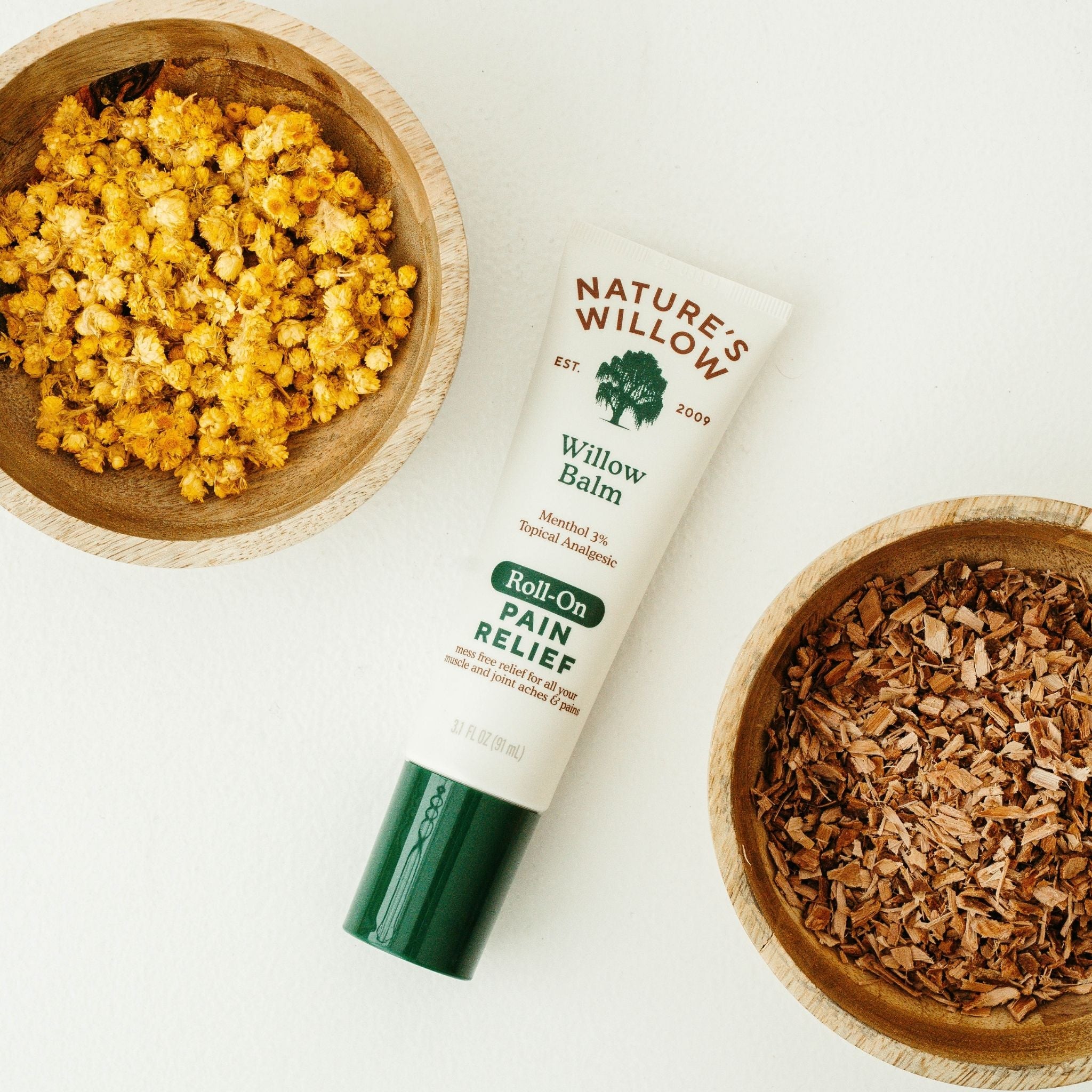
Keep moving in small, comfortable amounts. Complete bed rest actually slows recovery for ordinary muscular back pain, contrary to old advice. The NHS specifically recommends staying as active as possible rather than resting in bed, along with using wrapped heat or ice for comfort. A wrapped ice pack or heating pad both work, whichever feels better to you, in 15 to 20 minute sessions. Never apply either directly to skin. Many people also reach for a topical option at this stage, since a pain relief roll-on applies without the mess of a cream and fits easily into a gardening bag or back pocket for reapplication throughout the day. Avoid forcing a stretch into sharp pain. Gentle and neutral is the goal here, not aggressive.
Over the next 2 to 3 days
Gradually resume normal daily movement. If a specific motion clearly worsens the pain, back off from that motion specifically rather than avoiding all activity. This is also a reasonable window to consider whether an over-the-counter pain reliever is appropriate for you. That decision depends on your other medications and health history, so it's worth a quick conversation with a pharmacist rather than guessing. If you want a topical option, you can read our guide on how to choose a natural pain relief cream formulated with willow bark and menthol; it can also be worth adding into your routine at this stage as a non-oral way to manage ongoing soreness.
What not to do
Don't ignore it and go back out to “finish the job.” Don't stretch through sharp or radiating pain. Don't stay completely still for days at a time. And don't assume every backache needs imaging or a specialist. Most don't.
Gentle Stretches for Gardening Recovery
There's no single stretch that works for every type of back pain, and that's actually the more important point than any specific move. The right approach is:
- Choose movements that feel relieving or neutral, never ones that increase the pain
- Avoid pushing your spine further into whatever direction triggered the pain in the first place
- Stop immediately if something feels sharp, or if pain spreads further down your leg or causes tingling
- If you have a diagnosed spinal condition, follow your clinician's specific guidance over generic advice
Gentle options many people tolerate well include slow knee-to-chest stretches, cat-cow movements on hands and knees, and easy walking. But “many people” isn't “everyone,” so treat your body's response as the real instruction manual here, not a list on a blog.
Which Gardening Task Triggered Your Pain?
Different tasks stress your back in different ways, and knowing which one caused the problem helps you modify it next time instead of avoiding gardening altogether. HealthPartners recommends pivoting with your feet instead of twisting through the spine as one of the simplest fixes across nearly every task below.
|
Task |
Why It Strains Your Back |
Smarter Approach |
|
Weeding |
Sustained forward bending plus repetitive pulling |
Kneel on a padded mat or sit on a low stool instead of bending from the waist |
|
Digging |
Repeated loading combined with rotation |
Use smaller shovel loads and alternate your lead foot |
|
Lifting soil or pots |
Weight held far from your body |
Split heavy bags into smaller loads; use a garden cart |
|
Raking |
Repetitive trunk rotation |
Shorten your strokes and move your feet instead of twisting |
|
Mowing |
Prolonged forward push and leaning |
Keep the handle close to your body; don't rush on inclines |
|
Pruning |
Overhead reaching, upper-back strain |
Reposition your ladder or stance instead of overreaching from one spot |
If you're still building your gardening setup, explore our guide to the must-have essentials for budding gardeners for a practical list of tools and supplies to help you get started.
If you're wondering specifically why your back hurt after weeding, it's usually this: weeding keeps you in a sustained forward-bent position far longer than any other gardening task, often 30 minutes or more without changing posture. That sustained flexion, not any single movement, is what triggers the strain.
It's Not Just Your Back: Knee and Hand Pain From Gardening
Back pain rarely travels alone. Knee pain from gardening is extremely common and usually comes from prolonged kneeling on hard ground, which compresses the joint and surrounding tissue. A gardening kneeler pad or knee cushion solves most of this immediately, and applying a pain relief cream to sore knees afterward can help with lingering ache.
Hand pain after gardening, meanwhile, is typically from repetitive gripping tools, pulling weeds, or vibration from equipment like hedge trimmers. Aching at the base of the thumb or across the knuckles after a gardening session is usually overuse-related, though pain that persists for more than a few days or comes with swelling is worth mentioning to a healthcare provider.
When Should You See a Doctor?
Most gardening back pain resolves with home care. See a doctor if you notice:
Seek Medical Attention If You Notice:
|
None of these are common outcomes, but they're the ones worth taking seriously rather than waiting out.
When Can You Start Gardening Again?
You don't need to wait for zero discomfort, just meaningful improvement. You're likely ready for light gardening again when:
- Walking is comfortable
- Your pain is clearly trending better, not worse
- You can stand up from a chair without a sharp catch of pain
- Nothing is radiating into your leg
- You can do a handful of gentle squats or hip hinges without a flare-up
When you do go back, start with a short, low-load task rather than jumping straight into digging or heavy lifting. Ease back in over a few sessions rather than one long day.
How to Avoid Pain When Gardening Next Time
- Warm up for five minutes before you start; a short walk is enough
- Rotate tasks roughly every 20 minutes so no single muscle group is overloaded
- Bend at the knees and hips when lifting, not from the waist
- Keep loads close to your body instead of reaching out to grab them
- Pivot with your feet rather than twisting through your spine
- Use raised beds, kneelers, garden carts, and long-handled tools to reduce strain
- Take real breaks, not just pauses to decide what to do next
- Build gardening stamina gradually across the season instead of doing it all in one weekend
Nature's Willow TipKeep a pain relief patch or roll-on nearby for after your session. Treating minor soreness early tends to prevent it from building into something worse over a full gardening season. |